


What VOCs Are and Where They Come From in Packaging Inks
Volatile organic compounds are carbon-based substances that evaporate readily at room temperature. In packaging printing, the familiar ones are alcohols such as ethanol and isopropanol, acetates such as ethyl acetate, ketones such as methyl ethyl ketone, and aromatic solvents such as toluene. Traditional solvent-based inks use these liquids to dissolve resins, carry pigment onto the substrate, and control how the ink dries.
During a press run, most of that solvent does not stay in the print. It leaves the ink film as the web passes through drying sections and as printed sheets cure. Some evaporates directly into the pressroom; some is captured in exhaust. Either way, it becomes airborne VOC, with two consequences. Outdoors, VOCs react with nitrogen oxides in sunlight to form ground-level ozone. Indoors, solvent vapor affects air quality and can cause odor, eye and respiratory irritation, and headaches.
Packaging buyers feel this through regulation. The EU and the US impose VOC limits and reporting obligations on printing operations, and many brands set their own emissions or restricted-substance expectations for suppliers. This matters especially in packaging because designs often use flood coats, solid backgrounds, and large printed panels. When we print folding cartons, paper bags, or tubes, a small difference in solvent content per square meter becomes many kilograms of VOC across a full run.
That is why converters producing paper packaging increasingly ask for a lower-VOC ink system that still holds dense color and rub resistance on board. Water-based inks address that trade-off.
How Water-Based Inks Reduce the VOC Load in the Pressroom
At the press, the main change is in the ink itself. A water-based ink uses water as the carrier for pigment and polymer resin or emulsion. The remaining liquid portion includes a small co-solvent and an amine for pH control. Water is not a VOC, so as printed paperboard moves through the drying tunnel, the water that leaves the ink film does not add to the pressroom’s organic vapor load.
The co-solvent and amine portion is where VOC reduction happens. A solvent-based ink may be 50–80% organic solvent by weight, so most of the liquid required to make it printable evaporates as VOC. Water-based ink replaces most of that organic solvent, leaving only a small co-solvent and amine load, and formulators choose co-solvents with lower vapor pressure and lower emission potential. Because much less organic material enters the air per printed square meter, the same press run generates fewer VOC emissions.
Drying also works differently. On paper and board, water absorbs into the fibers while a portion evaporates from the surface. The paper surface becomes part of the drying system, so the press does not need to drive off as much solvent with high-velocity hot air. Less aggressive solvent flash-off means fewer solvent vapors in the operator area and a simpler exhaust stream to handle.
For the paper boxes, bags, tubes, and labels we print, this translates into cleaner pressroom air, lower reported VOC emissions per packaging job, and less burden on downstream emission-control equipment. It is the main reason water-based ink systems are preferred for VOC-sensitive paper packaging.
Water-Based vs. Solvent-Based and UV Inks: What Changes for Emissions and Print
When a packaging buyer asks us to cut VOC load without changing the entire finishing line, the first variable we compare is the ink family. The table below separates the three common systems by what evaporates, how each dries, and where it fits on paper packaging.
| Ink type | Typical carrier | VOC emission profile | Drying mechanism | Best paper packaging fit | Main trade-off |
|---|---|---|---|---|---|
| Solvent-based | Organic solvent blend | High VOC and odor; solvent evaporates into pressroom air | Fast evaporation, often with heated air | Films, laminates, difficult non-porous surfaces | Strong adhesion and speed, but high emissions and odor control |
| UV | Reactive monomers/oligomers with photoinitiators | Little liquid solvent evaporation, but UV odor, energy use, and potential migratables | UV lamp cure by polymerization | Coated boards and value-added finishes that tolerate UV cure | Fast cure and good resistance, but not a one-for-one water-based replacement |
| Water-based | Water with small co-solvent and amine content | Low VOC; water carrier contributes no VOC | Absorption into paper plus evaporation; slower on non-porous surfaces | Porous paperboard, bags, tubes, labels | Slower drying on films and coated or non-porous stocks |
Read the table by separating emission reduction from print performance. The emission column is the main reason to choose water-based; the drying and substrate columns determine whether the process changes are acceptable. Solvent inks win when the job is film or difficult adhesion, but the VOC and odor profile is the cost. UV removes most liquid solvent evaporation but brings lamp energy, photoinitiators, odor, and handling requirements; it is a different process, not a simple drop-in. Water-based is the low-VOC default on absorbent paper and board, with drying more dependent on stock porosity and air flow.
In our paper packaging work, that balance is normal: a folding carton or paper bag can take advantage of water-based ink because the fiber surface helps dry the print. On a high-gloss film lamination, we would not specify water-based just for an emission claim; the surface has to match the ink system.
Running Water-Based Inks: What Changes at the Press
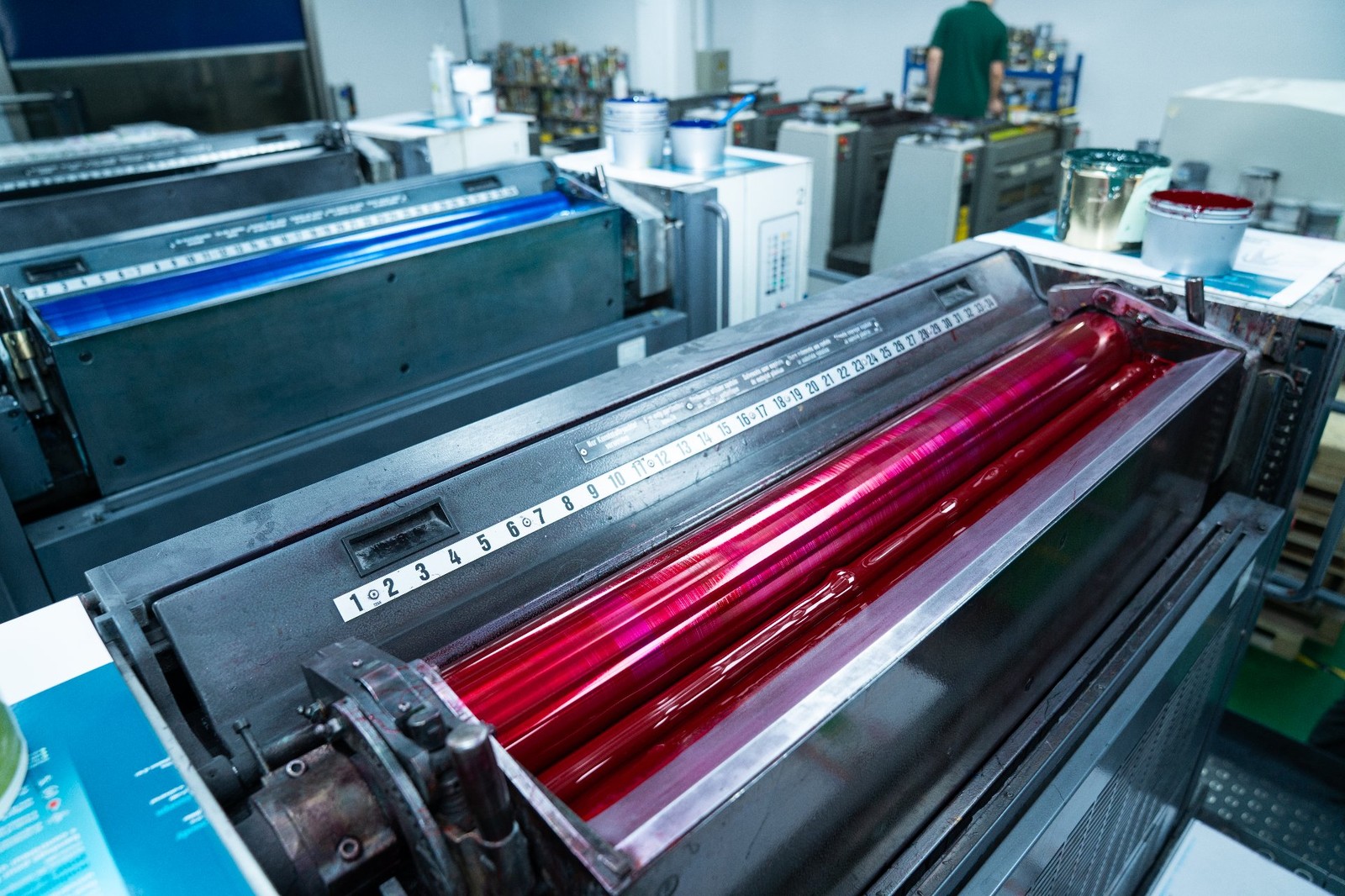
When a job moves to water-based ink, the pressroom conversation shifts from solvent balance to water balance. Two numbers matter most: viscosity and pH. Water-based inks are buffered systems; when pH moves outside the correct window, resin stability can drop, color strength shifts, and transfer becomes uneven on the anilox or plate. On a flexo run, we check pH at makeready and again after any extended stop, and we bring viscosity down with water or retarder rather than adding back solvent. That one habit prevents many color and laydown problems.
Plate and anilox choices also change. Water-based ink does not carry the same solvent bite through a film or coating, so a job often runs cleaner with a different anilox cell volume, line screen, or plate durometer than its solvent-based equivalent. We test these on the actual stock instead of assuming the previous settings will transfer. Offset work needs similar makeready care because the fountain solution and ink must stay in balance with a water-rich system.
Drying is where most expectations need adjusting. Water leaves by absorption into porous paper and by evaporation. On uncoated kraft or board, absorption helps; on coated board or heavy solid print, there is less fiber to carry moisture away, so dryers need more air volume and sometimes a modest temperature increase. Before the full run, we verify drying speed, dot gain, color strength, rub resistance, and adhesion on a press proof using the actual stock.
Cleanup is the simplest change: water and mild detergent replace high-VOC wash-up solvents, so wash-up emissions drop too. In our Shenzhen facility, these steps are part of normal water-based makeready for paper boxes, bags, tubes, and labels—not a special process added later.
Beyond VOC Reduction: Advantages That Affect the Whole Packaging Job
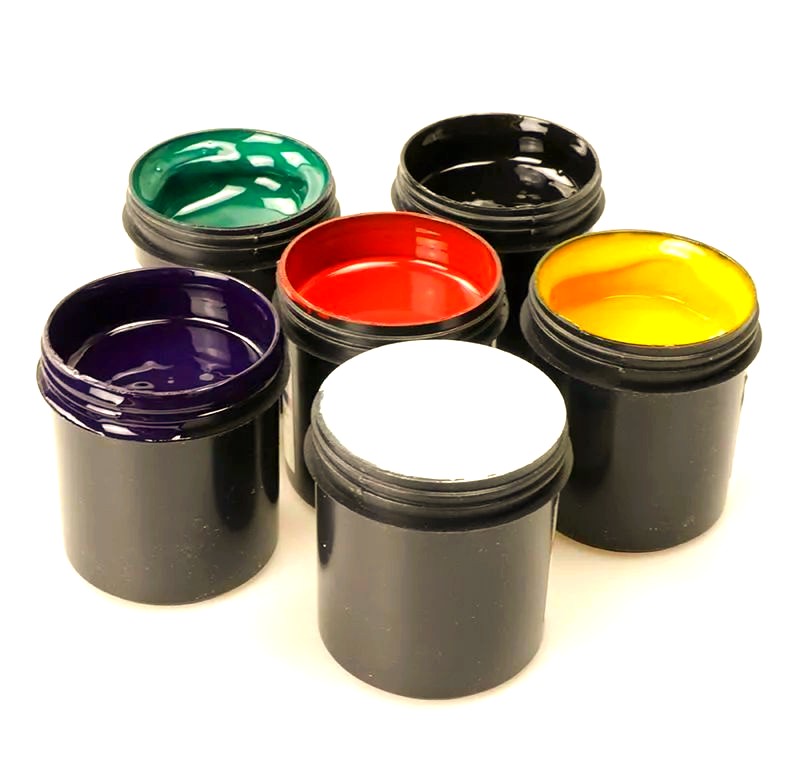
Water-based inks change more than the emissions number. The first thing many packaging buyers notice is what they don’t smell. Because the carrier is water rather than high-VOC solvents, finished cartons, bags, tubes and labels retain far less residual solvent odor. That matters for food packaging, cosmetics and any brand where unboxing is part of the product experience. A box that smells like paper, not solvent, reads cleaner to the end customer.
In the plant, the benefits are practical. Operators are exposed to fewer solvent vapors, and less flammable solvent must be stored and handled. Wash-up uses water and mild detergent, reducing solvent-contaminated waste and simplifying disposal.
Water-based inks are often selected for paper packaging intended for food contact when formulated and dried correctly. The exact ink, substrate, coating and lamination combination must be evaluated for the intended use. We ask for those details during quoting and pre-production sampling so the specification matches the application.
Water-based inks also simplify sustainability reporting. Less solvent use means fewer solvent-related emissions to track. In our Shenzhen plant, the same logic fits our ISO 14064-certified factory: fewer solvent inputs create a cleaner line item in carbon and VOC accounting.
Where Water-Based Inks Fit Best in Paper Packaging
Water-based inks fit best on absorbent paper and board, where the fibers pull water away from the printed film and give the ink a foothold. Folding cartons, rigid boxes, paper bags, paper tubes, and labels are the natural group because drying and adhesion come from the substrate itself, not from aggressive heat or UV cure.
In our custom paper packaging work, these are the products that benefit most. Food packaging, natural cosmetics, household items, and e-commerce unboxing often favor water-based inks for low residual odor and safer ink chemistry. A paper box or bag lets the printed surface breathe, so the finished package doesn’t trap solvent smell the way film or foil can.
Coated boards and laminated surfaces sit in the middle. A heavy clay coating or laminate can slow water absorption enough to reduce drying speed or weaken adhesion. On those stocks, we review the exact board, liner, and coating, and test whether a water-based primer or modified formulation is needed before committing to a run.
Film, foil, and non-porous plastics remain outside the ideal range. Unless the printed layer is later laminated, those materials are generally better served by solvent or UV inks. For custom paper boxes, bags, tubes, and labels, we check substrate and ink compatibility before quoting so the ink system matches the application.
How to Specify Water-Based Inks Without Slowing the Project
Specify ink and coating with the board early. We make custom paper boxes, bags, tubes and labels, so we start from a drawdown on the actual production stock, not a generic proof. Coated carton board, kraft paper and uncoated rigid-box wrap absorb water differently; a proof on art paper can mislead on color, drying and rub.
Define the end-use tests: scuff if boxes stack or ship, water resistance if the package may contact moisture, tape adhesion for taped cartons, and any odor or food-contact requirement. These results decide whether water-based ink alone is enough or a protective water-based coating or varnish is needed. High-coverage ink on coated board often needs that topcoat for rub resistance.
Sequence drawings and pre-production samples before the full run. We use pre-production samples on the actual stock to lock color, drying, pH and coating compatibility. For heavy coverage on coated board, set realistic drying time; air knives and IR or hot air help, but allowing the ink to set between stations matters more.
Specify the Ink System at the Same Time as the Box
Water-based ink is not a last-minute press switch. When you send drawings and end-use requirements early, we can match ink, substrate, print coverage, coating and compliance criteria together, so the specification works as a whole. We check board porosity, finishing layers, and any VOC or food-contact limits before quoting and sampling.
Pre-production samples are then made on the actual production board. That step shows how the water-based ink lays down, dries, scuffs, and behaves after finishing — before the full run is committed. If a small trial on the same stock would help, our digital short-run line from 50 units gives a fast validation path.
Send your drawing, target substrate, and any VOC or food-contact requirements. We will quote the packaging and include a sample plan that lets you approve the ink performance in hand.
Water-based inks reduce VOC emissions by replacing most of the organic solvent with water while meeting paper packaging needs. Let’s specify that from the start, not fix it later.
FAQ
Can water-based inks be used on coated board or laminated surfaces?
Yes, but they require testing. Heavy clay coatings or laminates slow water absorption, so we check the exact board and may use a primer or modified formulation, and often add a protective water-based coating for rub resistance.
Do water-based inks meet food-contact packaging requirements?
They are often selected for food packaging when formulated and dried correctly, but the exact ink, substrate, coating, and lamination must be evaluated for the intended use. We ask for those details during quoting and sampling.
What is the minimum order quantity for a water-based ink packaging trial?
Our digital short-run line starts from 50 units, which lets you validate water-based ink performance on the actual stock before committing to a full run.


