


- Material
- 2.0 mm greyboard
- Lead time
- 7 days express / 15 days standard / 30 days bulk
- Quote reply
- Within one business day
- MOQ
- Confirmed at quote, by structure and size
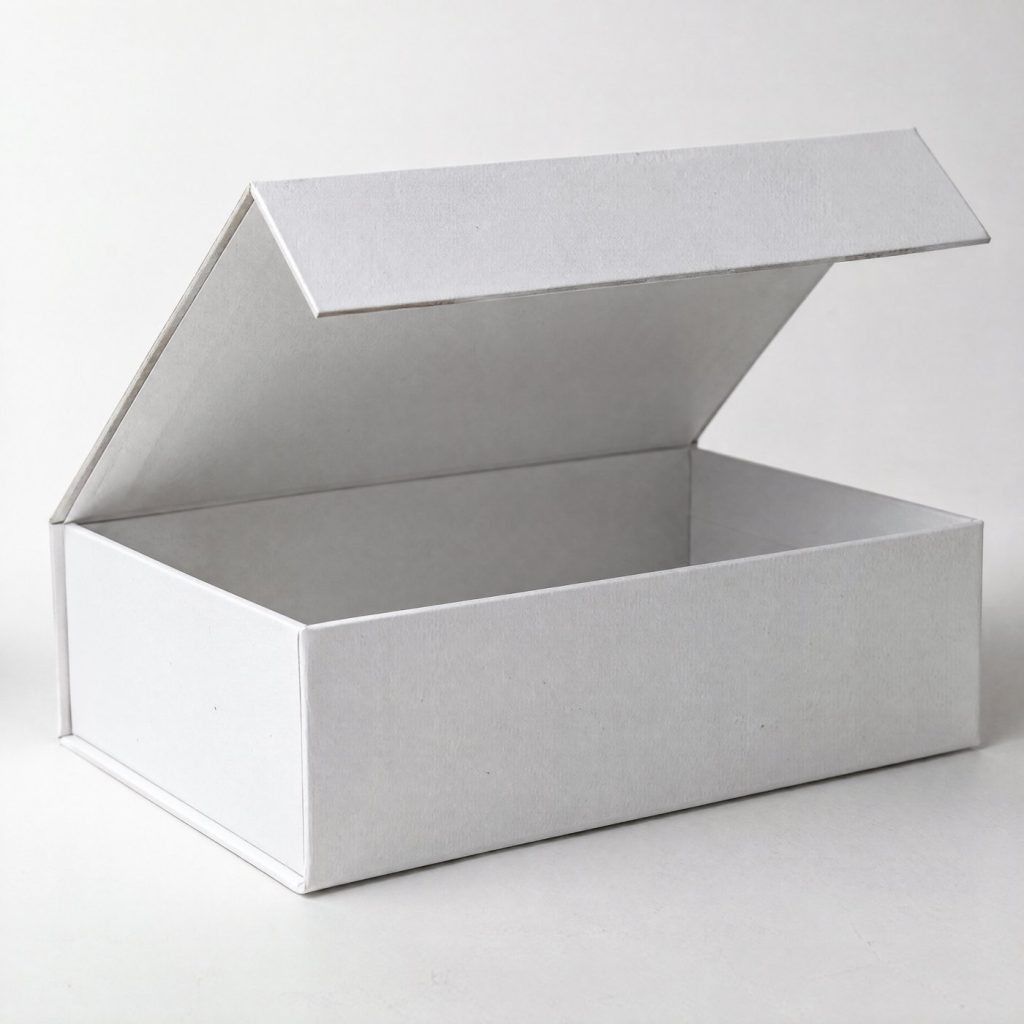
A magnetic closure box is a rigid box with magnets set into the lid and the base, so the pack closes by itself and opens with a deliberate pull. It is the structure buyers choose when the unboxing has to feel considered rather than disposable — cosmetics, spirits, jewellery, gift sets, corporate kits and subscription boxes that get kept.
This page covers the structures we produce, how board and magnet specification affect both feel and freight cost, what drives the unit price, and what to send us so the quote is a defined specification rather than an estimate.

What a magnetic closure box actually is
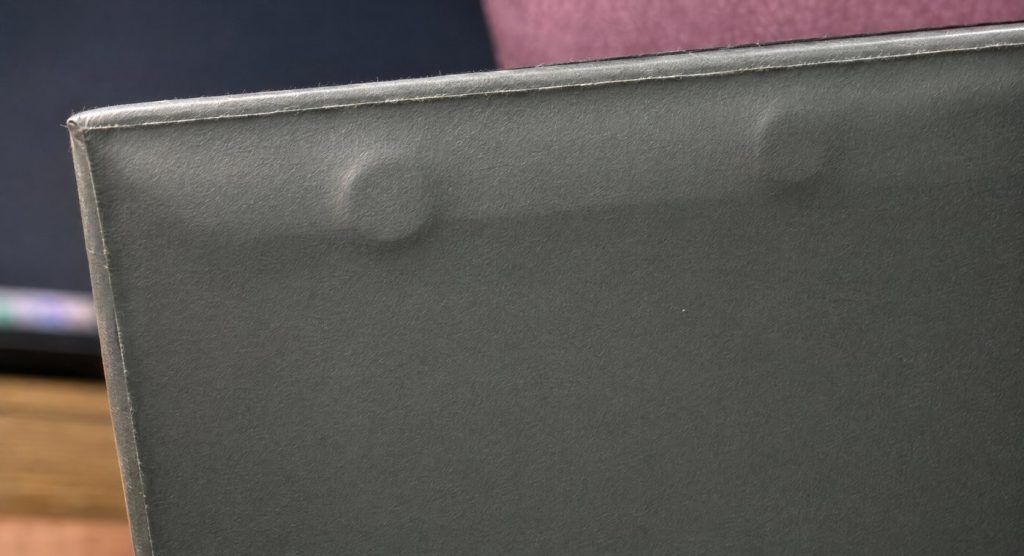
The term gets used loosely, so it is worth being precise. A true magnetic box has a greyboard core — typically 1.5 mm to 2.5 mm — wrapped in printed paper, with magnets recessed into the board so they sit flush. The lid and base are separate pieces joined by a paper hinge, or a single wrap that folds.
What separates it from a folding carton is not the magnet alone but the board. A 2 mm greyboard wall holds an edge. It resists the slight bow that thin cartons develop when the lid is opened repeatedly. That rigidity is why the structure survives being kept on a shelf for years, which is the entire point of a gift pack.
What separates it from a plain rigid box is the closing mechanism. A lift-off lid relies on friction and gravity. A magnetic box pulls itself shut and stays shut in transit without tape or a sleeve, which matters when the pack is shipped individually rather than cased.
When a magnetic box is the wrong choice
If the pack ships inside a master carton and is only opened by the end customer, a folding carton at a third of the cost may serve the same purpose. If the product is heavy enough that the lid carries load, a two-piece telescoping box with a locking base is more reliable than magnets. If the budget is below the tooling threshold for rigid construction, a sleeve over a folding carton gives a similar reveal without the board cost. We will say so in the quote rather than sell the more expensive structure.
Structures we produce
Magnet placement changes with the structure. These are the four we build most often, and what each is for.
Book-style box
The lid wraps around the base like a hardback cover, with magnets along the open edge. Widest print area on the lid, so it suits brands that use the top face as a graphic surface. Opens to roughly 180 degrees, which makes it good for presentation photography.
Lid and base, magnetic
Two separate trays with magnets in the walls. The most common structure for cosmetics and gift sets. The lid can be lifted clear instead of hinging, so the pack can be laid flat on a counter.
Drawer box with magnetic stop
An outer sleeve with an inner tray that slides out. A magnet holds the tray closed and gives a defined stop at full extension. Used where the product sits in a fitted insert and the customer should see it slide into view.
Two-piece with window
A magnetic lid with a die-cut aperture and a PET or recycled PET window, so the product is visible before opening. Common for candles, confectionery and single-item gift packs.

Board, wrap and magnet specification
Three specifications decide how the box feels in the hand, and two of them also decide what it costs to ship. Ask for these to be stated in the quote, because “rigid box” alone does not define a product.
- Greyboard thickness 1.5 mm is the lightest construction that still reads as rigid and is common for jewellery and small cosmetics. 2.0 mm is the general-purpose grade for gift boxes. 2.5 mm and above are used where the box is large, the product heavy, or the pack is expected to be reused. Thicker board adds weight across the whole shipment, so it is a freight decision as much as a feel decision.
- Wrap paper 128 gsm art paper is the standard for solid colours and fine print. 157 gsm holds up better on textured and specialty stocks. For a soft-touch surface the paper is laminated after printing, which adds a matte, slightly warm hand feel but also adds a production step.
- Magnet grade and size Neodymium magnets are specified by grade and dimensions — typically N35 or N42 at 8 mm to 12 mm diameter and 1.5 mm to 2 mm thick for a box this size. Stronger grade means a firmer pull, not a longer life. Oversized magnets can make the lid hard to open, which customers read as a defect.
- Magnet count and position Two magnets on a small box, four on a large lid. Position matters more than count: magnets set too close to the edge tear the wrap when the lid is pulled repeatedly.
Inserts and product fit
An insert does two jobs: it stops the product moving, and it controls what the customer sees first when the lid opens. The material choice is usually driven by the product’s surface rather than by cost.
EVA foam, wrapped
Cut to the product outline, then wrapped in paper or fabric so no foam is visible. The most precise option for fragile or irregular shapes, and the one that photographs best.
Moulded pulp
Recycled fibre formed to the product profile. Plastic-free and widely accepted in European markets, but the tooling cost only makes sense at volume.
Paperboard platform
A folded card platform that lifts the product to the right height. The lowest-cost option and the lightest to ship, suited to flat or boxed items that do not need cushioning.
Flocked or velvet-covered tray
A tray covered in flock or fabric, usually for jewellery and watches. The surface protects polished metal and reads as luxury, but it collects dust and needs a tight tolerance to look clean.
Tell us the product’s finished dimensions and filled weight. An insert engineered from a drawing usually fits on the first sample; one estimated from a photograph rarely does.
Printing and finishing
Because the wrap is printed flat and then wrapped around board, the finish is applied to paper rather than to a formed box. That widens the options compared with direct-to-board printing.
Foil stamping
Metallic or pigment foil pressed into the surface. Holds fine detail well and is the most common way to put a logo on a luxury pack. Oversized solid foil areas can show slight texture variation, so line work and type are safer than large blocks.
Emboss and deboss
Raised or recessed areas pressed with a metal die. Deboss into a soft-touch laminate gives a restrained, tactile result that photographs poorly but feels expensive in the hand.
Spot UV
A gloss varnish applied to selected areas over a matte laminate. Creates contrast between the graphic and the background without adding a separate material.
Soft-touch lamination
A matte film with a slight velvety hand feel. It hides fingerprints better than gloss but shows handling marks on very dark colours, which matters for black packs.
Edge painting
The cut edge of the board is painted to match or contrast with the wrap. Visible only when the box is open, and usually the detail that separates a good pack from a generic one.
Colour is managed to G7 targets with spectrophotometer readings taken during the run, so a reorder six months later still matches the approved sample. If your brand guideline specifies a Pantone value, we print to that reference rather than to a four-colour approximation.
What drives the unit price
Buyers are often surprised that two quotes for the “same” magnetic box differ by a factor of two. These are the variables that move the number, in rough order of impact.
- Board thickness and box size Both scale material consumption directly. A 2.5 mm wall on a 250 mm box uses substantially more board than a 1.5 mm wall on a 150 mm box.
- Insert complexity A flat paperboard platform is a few cents. A die-cut, fabric-wrapped foam insert can add more than the box itself, because it is assembled by hand.
- Magnet count and grade A real cost, though rarely the largest one. Four N42 magnets on a large lid cost more than two N35 on a small one.
- Print and finish steps Each finishing operation is a separate pass through a machine. Foil plus emboss plus spot UV is three passes, and each one adds handling and spoilage risk.
- Order quantity Rigid boxes carry setup cost — dies, make-ready, hand assembly jigs. That cost is fixed, so the per-unit figure falls sharply between the first order and a repeat run.
- Assembly method Hand assembly is normal for rigid boxes. The more separate components, the more labour per unit, which is why a five-piece set never costs five times a single box — it costs more.
Sampling and production windows
We produce a pre-production sample from your artwork so structure, colour and finish are checked before the run starts. Sample cost and timeline are quoted with the order, because a plain box and a six-component set are not the same job.
Standard production windows run from 10 to 30 days depending on the product type, the number of components and the order volume. Lead times are confirmed on the quotation rather than assumed from this page, and they start from artwork approval and sample sign-off rather than from the enquiry date.
If your launch date is fixed, tell us the date the packaging must arrive at your warehouse, not the date you would like it dispatched. Working backwards from the arrival date is the only reliable way to catch a schedule that will not hold.
How to specify a magnetic box
A quote is only as specific as the brief behind it. These are the details that let us price a defined specification instead of guessing.
- The product What it is, its finished dimensions, and its filled weight. A photograph helps, but dimensions decide the structure.
- Quantity per size or artwork version One total across mixed sizes cannot be priced accurately, because setup is per version.
- How the pack is used Retail shelf, e-commerce shipment, gift with purchase, or corporate gifting. A pack that ships individually needs a different closure from one that travels inside a master carton.
- Destination market Determines the compliance documents that travel with the shipment, and in Europe also affects material choices under packaging regulations.
- The date it must arrive Not the dispatch date — the arrival date.
- Budget range and reference packs A range tells us which specification level to propose. Reference images tell us what you mean by “premium” faster than adjectives do.
Send those details and we reply within one business day with a specification, a unit price and a production window. If the structure you have in mind is not the right one for the product, we will say so and propose the alternative before quoting.
Other structures to compare


Related reading


Questions
Does the pull weaken with use?
A weaker close is not necessarily a weaker magnet. The adhesive may have loosened, the magnet may have shifted, or the box may have deformed so the two faces no longer meet. For frequent opening, test repeated cycles on a sample first.
Can it be made thin?
A thin build is possible, but board thickness, magnet size, mounting method and wrap allowance must be solved together. Not every magnet suits a thin box; confirm the thickness by sampling against the actual product.
Will the magnet scratch the product?
The magnet normally sits inside the wall or under the wrap. For scratch-prone products add an insert or barrier, and check on the sample that no magnet is exposed and the wrap is complete.