


- Material
- 2.0 mm greyboard
- Lead time
- 7 days express / 15 days standard / 30 days bulk
- Quote reply
- Within one business day
- MOQ
- Confirmed at quote, by structure and size
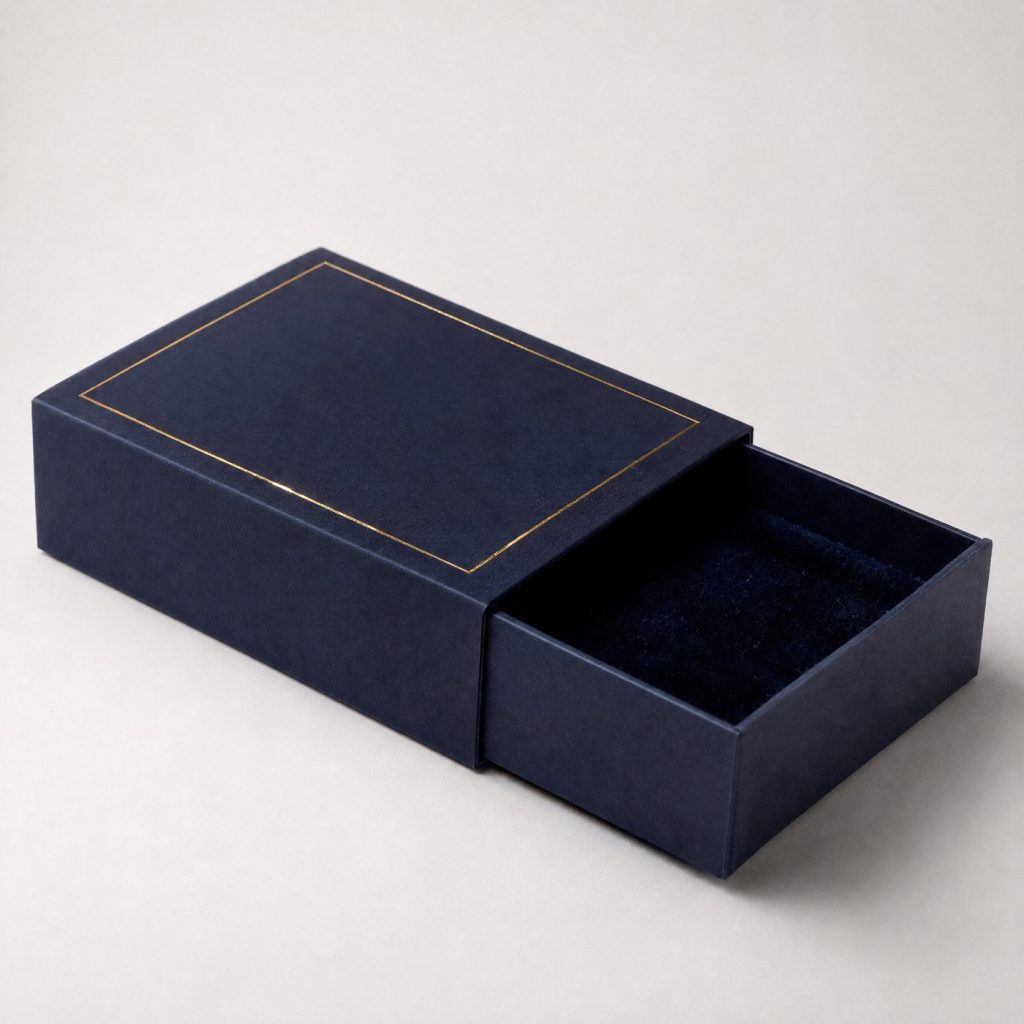
A drawer box is an outer sleeve with a tray that slides out of one end. The appeal is ceremonial: the product arrives by being drawn forward rather than lifted out, which reads as deliberate. The cost is mechanical, because two surfaces now rub against each other every time the pack is opened.
How it is built
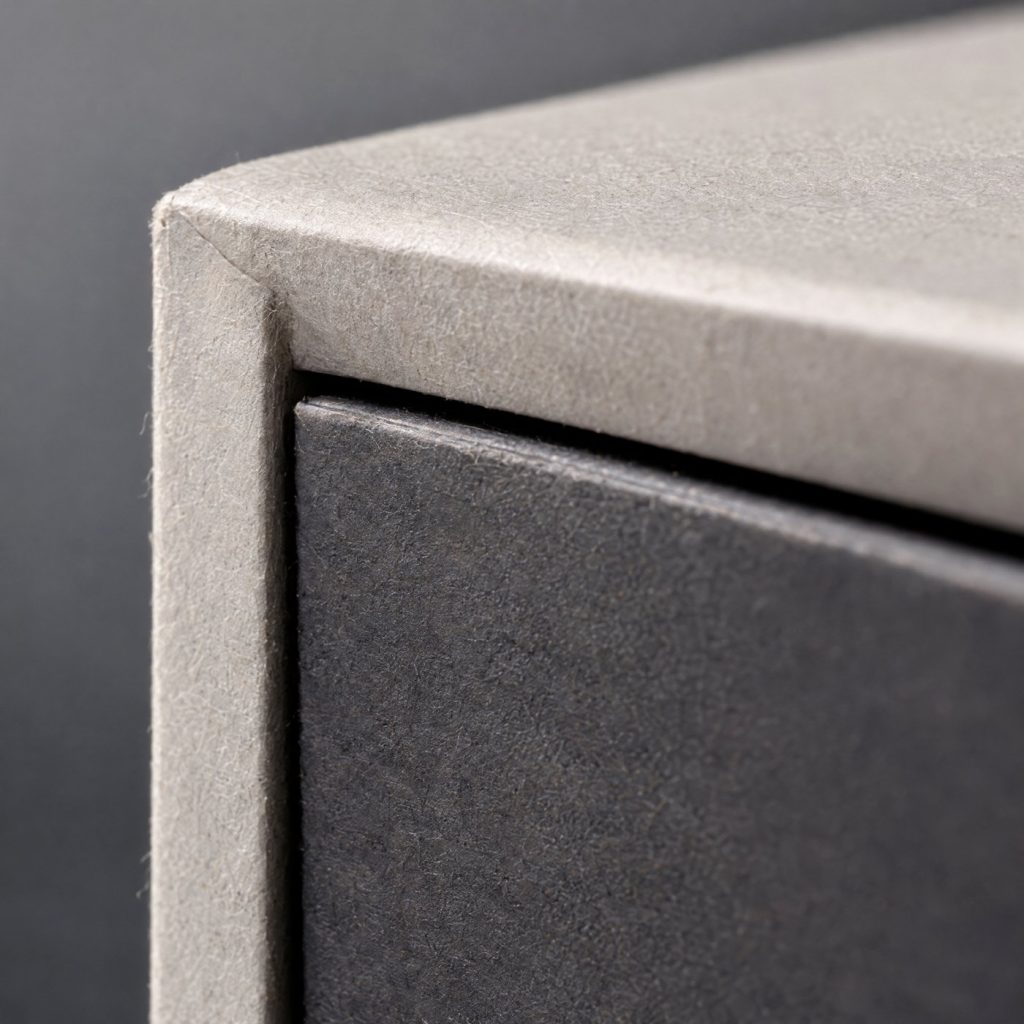
The outer sleeve is built and wrapped first, then the tray is made to fit it. Contact faces are checked and trimmed before the pull is fitted, because a ribbon or a finger hole changes how the tray is gripped and therefore how much clearance it needs. The pair is then run in and out by hand before packing.
What to watch when you specify
The clearance between tray and sleeve decides everything else. Too much and the drawer jams in a humid room; too little and it slides open in the bag. Paper scuffs where the tray meets the sleeve, so a dark wrap shows wear first. If the pack will be opened repeatedly, say so: a wear strip or a different contact material changes the specification, not just the finish.
Material and size
Clearance is set by board, wrap and surface treatment together. A laminated wrap is slicker than an uncoated one, so the same drawing gives a looser drawer after lamination. Long or heavy trays need a pull, a finger notch or an internal support, and a heavy product needs the tray floor doubled or the drawer will sag and bind at the front edge.
| Item | Typical specification |
|---|---|
| Construction | Outer sleeve plus sliding tray |
| Pull | Ribbon, finger notch or cut handle |
| Clearance | Adjusted after lamination |
| Stop | Optional, limits travel |
| Size | Confirmed per order |
| MOQ | Confirmed at quote |
Options we build
- Ribbon pull, cut finger notch or a turned paper handle
- A stop that limits travel, or a fully removable tray
- Ribbed or laminated contact faces where wear shows
What goes wrong, and how we test for it
A drawer that sticks is usually a dimension problem, not a material one: the sleeve has been wrapped slightly tight, or the tray has grown after gluing. A drawer that falls out is a missing stop. Standard drawer structures do not limit travel unless a stop is designed in, so decide early whether the tray should come fully out or stop at two thirds.
Where it fits, and where it does not
Against a lid-and-base box, a drawer adds a sleeve and a sliding fit, and removes the need to lift anything off the product. That makes it better for tall items and for retail where the pack is opened in front of the customer. Against a book-style box it is cheaper to build but offers less printable area, since the sleeve only shows two faces at a time.
What drives the unit price
The drawer is priced on fit, not on area. Extra clearance means hand adjustment at assembly; a stop or a ribbon pull adds a component and a fixing step. Long trays are disproportionately expensive because they are harder to keep square, and a tray that twists will bind no matter how much clearance is given.
Packing and freight
Drawers must ship closed and restrained, or they arrive half open with the tray corner crushed. A paper band around the sleeve is enough for retail; for export, a small clear sticker at the seam is cheaper than a damaged pack. If the tray is loaded before shipping, add a foam block behind the product so it cannot slide and load the front panel.
What to send us
Send the product dimensions, its weight, and how far the drawer should come out. Tell us if the pack will be opened in a shop where it is handled daily, because that decides whether the contact faces need a wear strip. A sample of the product is better than dimensions if it has an irregular shape.
Other structures to compare


Related reading


Questions
Can a drawer box carry heavy products?
The tray carries the load, so the board and the base need to be upgraded. Check the pull with the real product fitted, not an empty sample.
How do I stop the tray sliding open in transit?
A magnet, ribbon pull or paper tab can hold it closed. The catch belongs on the side wall rather than the front panel.
Can the tray be printed inside?
Yes. Interior print is usually applied before assembly, and dark inks can mark the sleeve at the contact points; check with a sample.