


- Material
- 100–157 gsm paper
- Lead time
- 7 days express / 15 days standard / 30 days bulk
- Quote reply
- Within one business day
- MOQ
- Confirmed at quote, by structure and size
A gusset bag has folded side panels that open out, so a flat bag becomes a three-dimensional one when it is loaded. The gusset is the difference between a bag that holds a shirt and a bag that holds a box. It ships flat, opens to a controlled depth, and collapses again, which is why it dominates apparel and retail packaging.
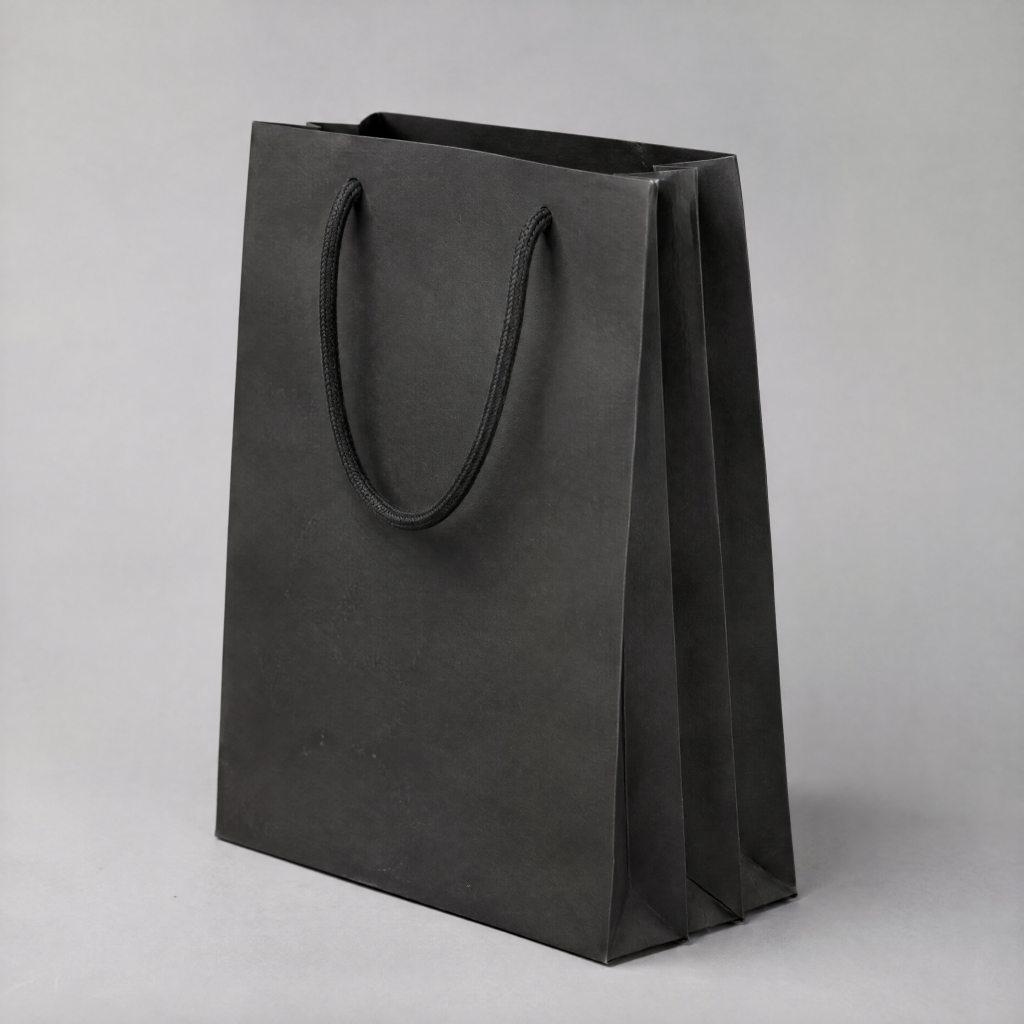
How it is built
The paper is printed, the side gussets are creased and folded inward, the tube is glued and the base is formed. The gusset depth is set at the creasing stage, so it cannot be changed after printing. Handles go through the front and back panels, never through the gusset, because a handle in a fold will tear out.
What to watch when you specify
The gusset fold is worked every time the bag is opened and closed, so it fatigues. Loading beyond the gusset depth does not widen the bag, it pulls the fold open and puts the stress into the side seam. A bag that is filled past its gusset also loses its shape and will not sit flat against the body when carried.
Material and size
Gusset depth sets the usable thickness, but the paper and the seam decide how much that thickness can weigh. Kraft takes the fold well and hides scuffing; coated white board prints better but cracks along the gusset crease if the grain is wrong. The base still has to carry the load, so a deep gusset on light paper is a false economy.
| Item | Typical specification |
|---|---|
| Gusset | Folded side panels, set at creasing |
| Handles | Front and back panels only |
| Paper | Kraft or coated, grain along fold |
| Base | Square or V, by load |
| Size | Width, height, gusset depth per order |
| MOQ | Confirmed at quote |
Options we build
- Single gusset, or a gusset on both sides
- Square or V base, by load
- Handles through the panels, never through the fold

What goes wrong, and how we test for it
The gusset splits along the fold, or the side seam opens at the point where the gusset meets the base. Both come from overloading: the gusset is a fold, not a stretch. The third failure is a handle torn through the front panel because it was placed too close to the gusset edge.
Where it fits, and where it does not
Against a flat bag, a gusset holds a boxed product and keeps its shape on a counter, at the cost of more paper and an extra creasing step. Against a square-bottom bag, it is the same base with more side volume, so it suits apparel and boxed goods rather than bottles.
What drives the unit price
The gusset adds creasing and folding steps, so the bag costs more than a flat one of the same paper. Depth matters less than the number of panels: going from a single gusset to a double gusset is close to doubling the folding labour, which is why double-gusset bags are reserved for specific shapes.
Packing and freight
Gusseted bags ship flat with the gusset folded in, and they stack well. Store them flat and dry under light weight: a bundle that has been compressed will take a permanent crease in the gusset and the bag will never open to full depth again.
What to send us
Send the folded product size, not the flat one, because the gusset depth is set by how thick the item is when packed. Tell us whether the bag will be reused, since that decides the paper and the handle. If the product has corners, send it: a corner will wear through a gusset fold. Send the thickest item that will go in, not the average one. A gusset is set by the maximum thickness, and one oversized item ruins the fit for every other.
Other structures to compare


Related reading


Questions
How is the size measured?
Flat width plus gusset equals the expanded width. Confirm which figure a quote uses.
Can it stand upright?
A deep gusset helps, but a base board is needed for a full load.
Can it be printed on the gusset?
Yes, though the design has to allow for the fold.