


- Material
- 128–157 gsm paper
- Lead time
- 7 days express / 15 days standard / 30 days bulk
- Quote reply
- Within one business day
- MOQ
- Confirmed at quote, by structure and size
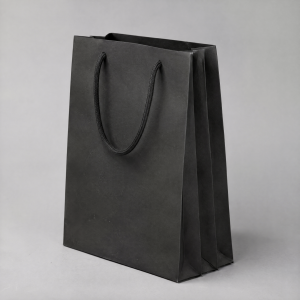
A square-bottom bag has a folded base that opens into a flat panel, so the bag stands on its own once loaded. It is the default retail bag for a reason: it holds its shape on a counter, takes print on two large faces, and packs flat before use. The base takes most of the engineering, and it is the part that fails when the bag is overloaded.

How it is built
Paper is printed, cut and creased, the side seam is glued into a tube, and the base is folded and glued into a flat panel with a reinforcing flap. The handles go in last, through reinforced holes or over a turned top edge. The bag then ships flat, with the base creased so it opens without being forced.
What to watch when you specify
The base carries the load through glued flaps, so the glue area and the paper stiffness decide how much it holds. A bag that is loaded heavy and carried by one handle puts a twisting load on the base corner, which is where the seam gives way. Damp paper loses strength quickly, so a bag left in a wet doorway is weaker than the same bag in a shop.
Material and size
Width, height and base depth are chosen together: a deeper base gives more volume and a more stable bag, but it also moves the centre of gravity and increases the paper needed. Heavier contents call for a base card or a wider glue flap rather than simply a thicker sheet, because the failure is at the seam, not in the panel.
| Item | Typical specification |
|---|---|
| Base | Folded flat panel, glued |
| Paper | Coated or uncoated, by load |
| Handles | Reinforced holes or turned edge |
| Reinforcement | Base card or wider glue flap |
| Size | Width, height, base depth confirmed per order |
| MOQ | Confirmed at quote |
Options we build
- Base card, or a doubled base flap for heavier loads
- Paper cord, cotton or die-cut handle
- Turned top edge for a cleaner grip

What goes wrong, and how we test for it
The base seam opens, usually at one corner and usually on a bag that has been carried full. The second failure is a bag that will not stand because the base has taken a set while stored flat under weight. We load a bag to its stated weight limit and hang it for an hour before approving a paper and glue combination.
Where it fits, and where it does not
Against a flat bag, a square bottom stands up and presents the product, at the cost of more paper and a more complex base. Against a rigid box, it is far cheaper and packs flat, but it offers no protection, so it belongs around a product that is already boxed.
What drives the unit price
The base is the labour: folding and gluing four flaps takes longer than a flat bag’s single seam. Paper weight and handle type move the price more than size does. A base card adds a component and a step, but it is usually cheaper than moving to a heavier sheet for the whole bag.
Packing and freight
Bags ship flat in bundles, base creased. Store them flat and dry, and do not compress the bundles: a base that has been pressed flat for months will not open squarely. If the bags are printed with heavy ink coverage, interleave to stop offset.
What to send us
Send the loaded weight and the largest item the bag will carry, because the base depth follows the product, not the paper. Tell us whether the bag is a counter bag or a carry-home bag: the second needs a reinforced base. If the print covers the base, say so, because the folds run through it.
Other structures to compare


Related reading


Questions
Can it stand on its own?
Yes, when the base is folded square and the paper is heavy enough.
Can it carry bottles?
Only with a divider and a reinforced base.
Is it recyclable?
Uncoated paper with paper handles is widely recycled. Laminates change that.