


- Lead time
- 7 days express / 15 days standard / 30 days bulk
- Quote reply
- Within one business day
- MOQ
- Confirmed at quote, by structure and size
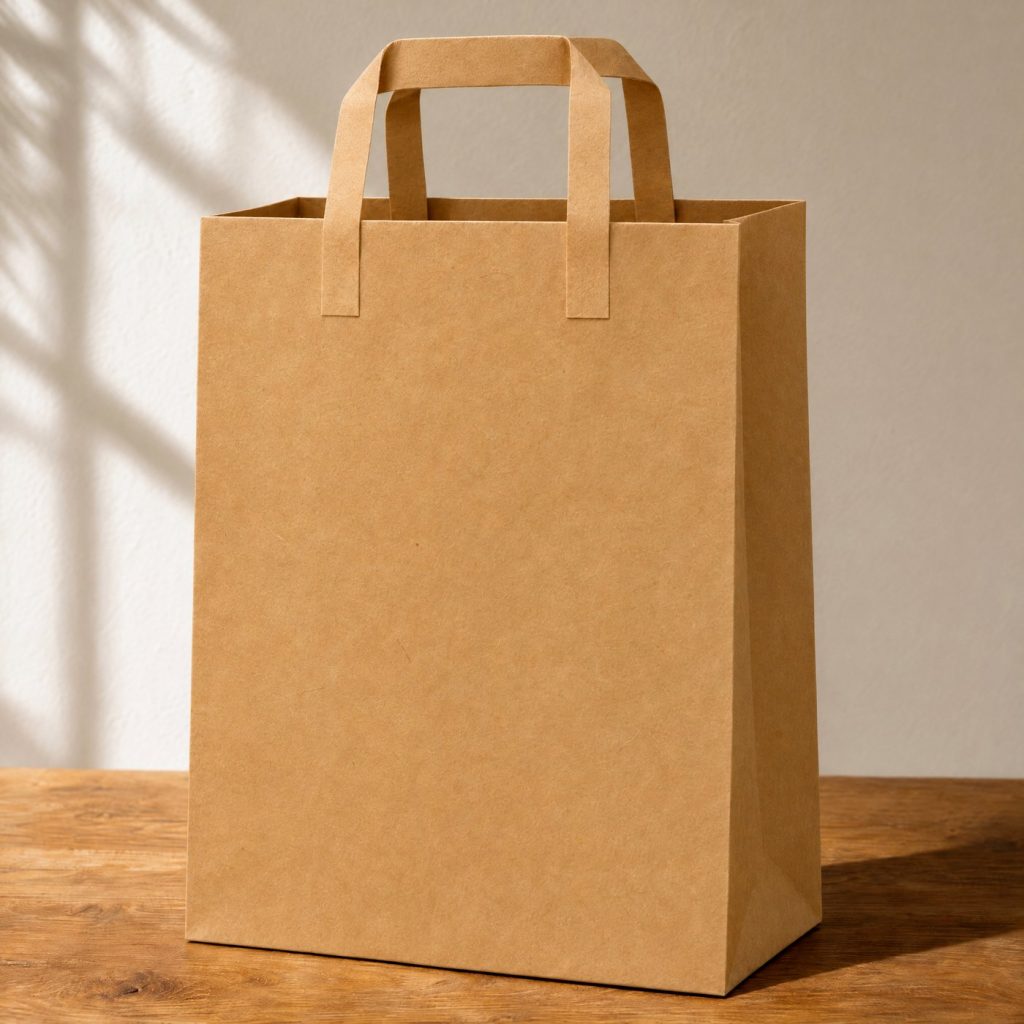
A kraft bag is defined by its paper rather than its shape. The sheet is unbleached or lightly bleached wood pulp, which gives it a visible fibre, a natural tone and good tear resistance for its weight. It is the bag that looks like paper, and that look is doing as much commercial work as the structure.
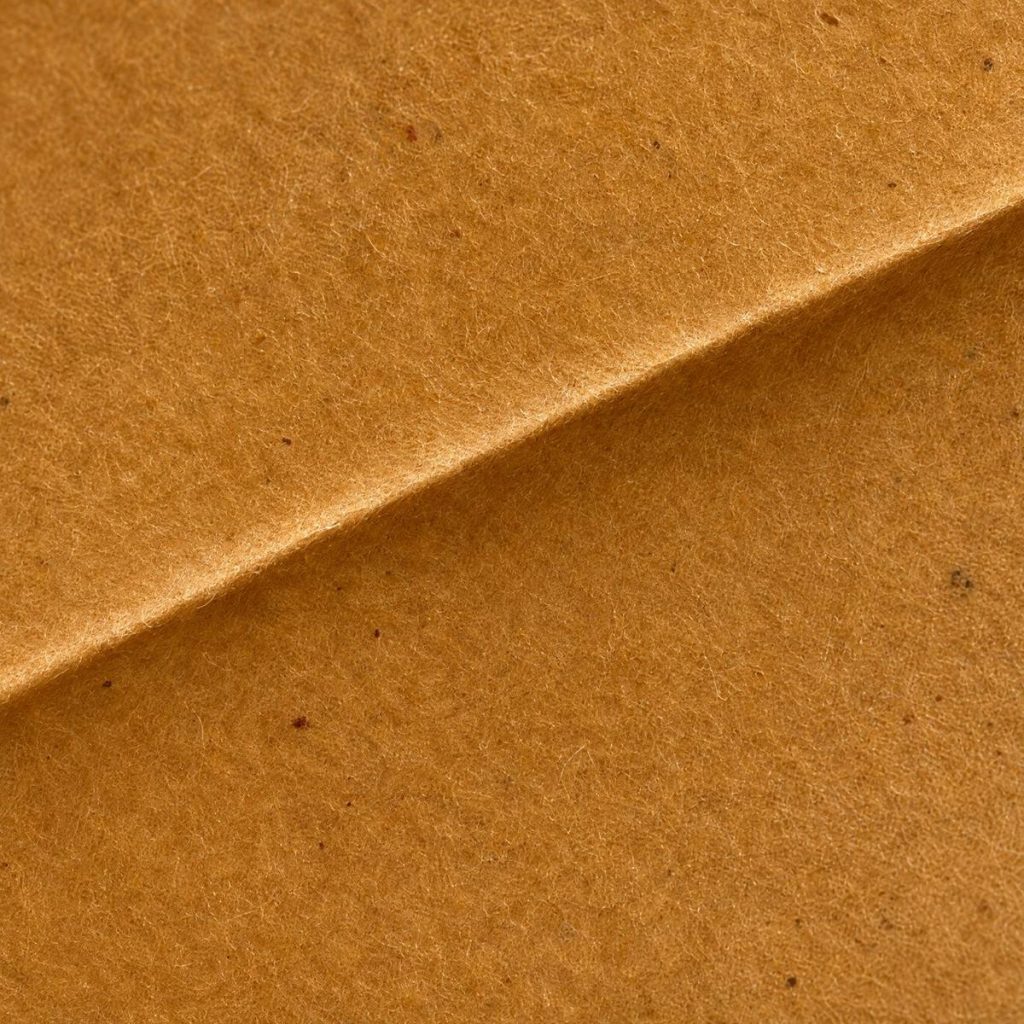
How it is built
Kraft is printed, cut, creased, glued at the side seam and base, and fitted with handles. The fibre direction matters: a bag cut across the grain tears more easily at the handle and folds less cleanly at the base. Because the sheet is not coated, ink sits on the surface rather than on a film, so the print reads slightly softer than on white board.
What to watch when you specify
Kraft changes colour when it gets wet, and it loses strength before it looks wet. A bag stored in a damp stockroom will fail at the handle long before it shows a stain. The natural tone also shifts between batches, which matters if the bag is part of a set with printed collateral on a different stock.
Material and size
Kraft comes in a range of tones and weights, and the weight is what decides the load. A heavier kraft is not automatically stronger than a lighter coated sheet: tear resistance and tensile strength are different properties, and the bag structure uses both. Base cards and wider glue flaps are the usual way to raise capacity without going up a paper grade.
| Item | Typical specification |
|---|---|
| Paper | Natural or white kraft |
| Direct on uncoated surface | |
| Handles | Paper, cord or die-cut |
| Base | Square, reinforced by load |
| Size | Confirmed per order |
| MOQ | Confirmed at quote |
Options we build
- Natural kraft, white kraft or a dyed tone
- Paper, cord or die-cut handle
- Uncoated for recycling, or coated for grease resistance
What goes wrong, and how we test for it
Handle tear-out and base seam failure, in that order. Both are load failures, and both are worse on kraft that has absorbed moisture. The third is print that looks uneven because the ink has sunk into an uncoated sheet at different rates across the run, which shows on large solid areas rather than on line work.
Where it fits, and where it does not
Against a white card bag, kraft looks warmer and hides scuffs better, but it reproduces colour less accurately and shows through-light differently. Against a coated bag it recycles more simply, since there is no film to separate, which matters in markets where the bag carries a recycling claim.
What drives the unit price
Kraft is usually cheaper per tonne than coated white board at the same weight, and it needs no lamination to look finished. The variable cost is print: uncoated stock needs more ink for a solid, and colour matching across batches is harder, so a heavily printed kraft bag can cost more than a lightly printed coated one.
Packing and freight
Kraft bags ship flat in bundles. Keep them dry: the material takes up moisture from the air and loses strength without any visible change. If the warehouse is humid, bag the bundles rather than leaving them open on a pallet. Do not stand a pallet directly against a cold external wall. Condensation forms behind the bundle, the outer bags take it first, and the failure shows up later as a handle that tears on a bag that looks dry.
What to send us
Send the product and its weight, and tell us whether the bag will be stored somewhere humid. Kraft loses strength before it shows moisture, so a damp stockroom is a specification input. If the print has a brand colour, send a physical reference: uncoated kraft shifts every colour printed on it. Send a sample of any printed material that will sit alongside the bag, so the kraft tone can be matched rather than guessed from a photograph.
Other structures to compare


Related reading


Questions
Can kraft carry four-colour print?
Yes, but colours look muted. One or two spot colours usually read better.
Is it recyclable?
Uncoated kraft with paper handles is widely recycled.
Can it be grease resistant?
With the right liner, yes; the liner changes the recycling route.