


- Lead time
- 7 days express / 15 days standard / 30 days bulk
- Quote reply
- Within one business day
- MOQ
- Confirmed at quote, by structure and size
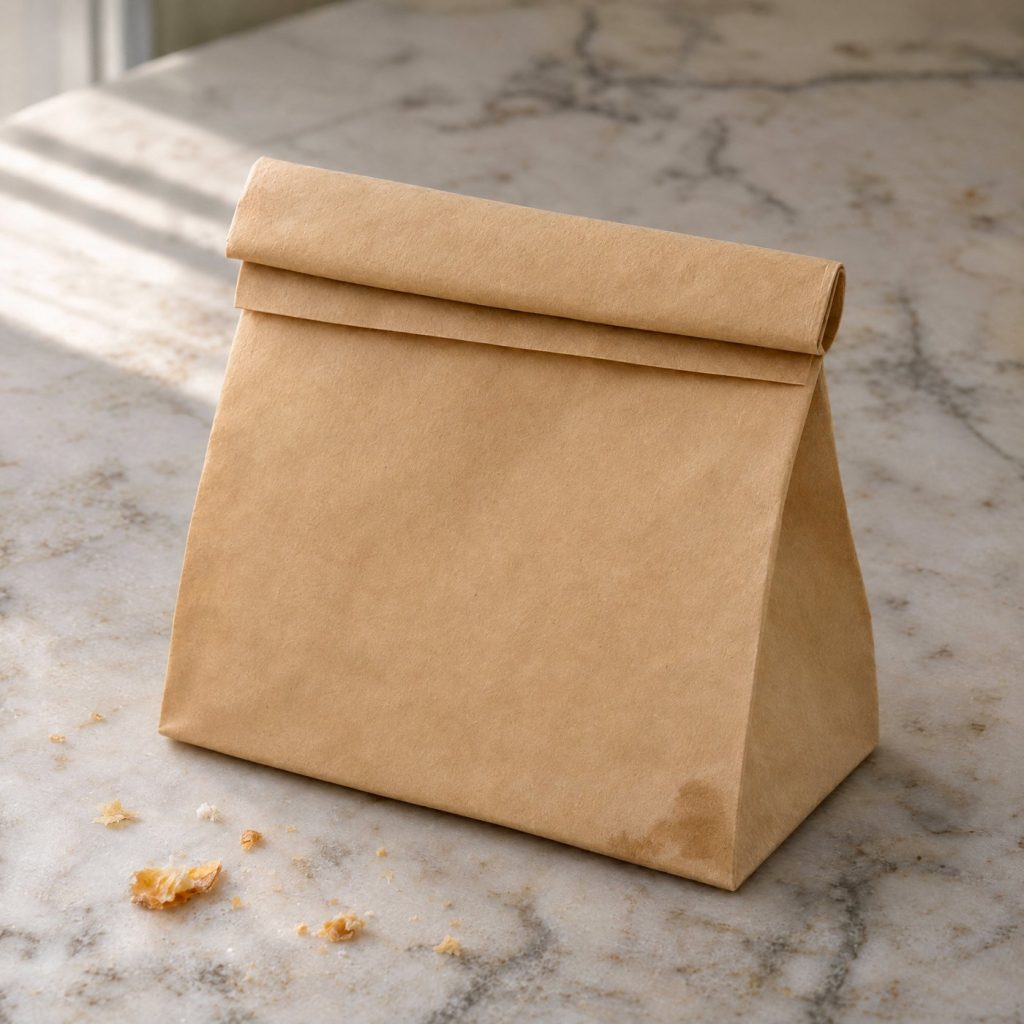
A food-contact bag is a paper bag with a documented material chain. The paper, the ink, the adhesive and any coating all touch food or sit close enough to migrate into it, so each one has to be suitable for the food, the temperature and the contact time. Being made of food-grade paper is not the same as being a food-grade bag.
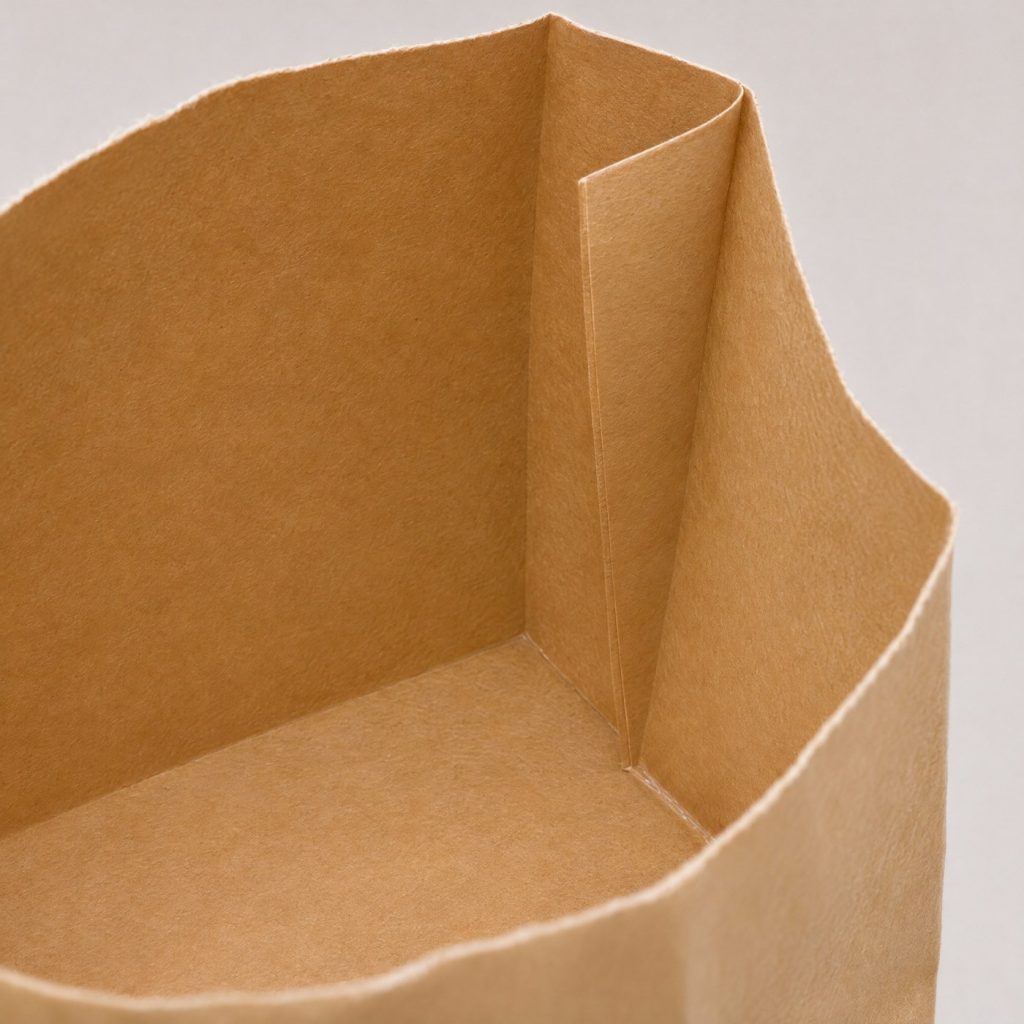
How it is built
Materials are confirmed first, before printing: paper grade, ink type, adhesive and coating each need a supplier declaration for the intended use. The bag is then printed, cut, creased, glued and packed in a clean area. Grease-resistant versions add a barrier layer, which changes both the material declaration and the recycling route.
What to watch when you specify
Grease and heat are the two variables that break assumptions. A bag that holds a dry pastry is a different specification from one that holds a hot, oily product, even though both look like paper bags. A coating that resists oil at room temperature may not resist it at 60 degrees, and the declaration has to cover the actual condition, not the ambient one.
Material and size
Uncoated kraft is the simplest composition to document and the least resistant to grease. A greaseproof barrier extends contact time but adds a layer that has to be declared. If the bag also has to be recyclable or compostable, the barrier choice narrows sharply, and in some combinations the two requirements cannot both be met.
| Item | Typical specification |
|---|---|
| Paper | Food-contact grade, declared |
| Ink | Food-contact suitable |
| Adhesive | Declared for indirect contact |
| Barrier | None, greaseproof or coated |
| Use | Dry, greasy or hot, stated at quote |
| MOQ | Confirmed at quote |
Options we build
- Uncoated food-contact kraft for dry goods
- Grease-resistant barrier for fried or oily food
- Paper or die-cut handle to stay single-material
What goes wrong, and how we test for it
The failure is usually compliance rather than structure: a component without a declaration, or a declaration that covers the paper but not the printed bag. Physically, the bag wicks grease through the base within minutes, or softens under a hot product and the base seam gives way. Both are predictable from the food type and should be specified, not tested after the fact.
Where it fits, and where it does not
Against a standard kraft bag, a food-contact bag costs more and limits the ink and coating options, and it buys a documented chain that a buyer can audit. Against a coated barrier bag, an uncoated food bag is simpler to recycle but only suits dry or short-contact food.
What drives the unit price
Declared materials carry a premium and often a minimum order. Barrier coatings add a pass and a material. Documentation takes time on the first order rather than money on every unit, so the per-unit premium falls with volume while the lead time on the first run stays long.
Packing and freight
Food-contact bags need clean, dry storage away from chemicals and odours, because paper takes up both. Keep them in the sealed carton until use. A bag stored next to cleaning products will carry the smell, and no amount of airing removes it completely. Keep the pallet off the floor and away from the wall, and use the oldest carton first. Paper takes up taint over time as well as on contact, and a bag that smells of the warehouse will carry that smell to the food.
What to send us
Send the food type, the temperature at packing and the contact time, and name the market. Those four answers decide the paper, the ink and whether a barrier is needed at all. A bag specified for a dry pastry is not the same product as one for a hot, oily meal, even if they look identical. Tell us if the food is packed hot and sealed immediately. Trapped steam changes the material requirement more than the food itself does.
Other structures to compare


Related reading


Questions
Can it touch food directly?
Only with the correct food-contact liner and paper. State the food type before selecting material.
Is it recyclable?
Coated liners follow a different stream from plain kraft; check locally.
Can it be heat sealed?
Only with a specific barrier material. Standard paper bags are folded or glued.