


- Material
- 350 gsm board, PET window
- Lead time
- 7 days express / 15 days standard / 30 days bulk
- Quote reply
- Within one business day
- MOQ
- Confirmed at quote, by structure and size
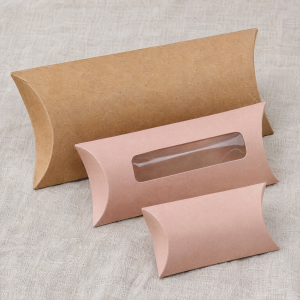
A folding carton with a window shows the product through a film patch without giving up the flat-pack economics of a carton. The window is cut and the film is applied in-line before the carton is glued, so the pack still ships flat and still erects in seconds. It is the standard retail pack for anything that needs to be seen before it is bought.

How it is built
The window is die-cut in the same pass as the carton, and the film is glued or heat-sealed around the opening while the sheet is still flat. The carton is then creased, glued at the side seam and delivered flat. Because the film goes on before folding, the patch has to be positioned so that it does not cross a crease.
What to watch when you specify
A window near a crease is a fold that will not fold. The film stiffens the panel exactly where it needs to bend, so the carton either buckles beside the window or the film lifts along the crease. Window position is therefore a structural decision, not a graphic one, and the dieline has to be drawn before the artwork is finalised.
Material and size
Film thickness follows the window size: a large opening on thin film drums and reflects, a small opening on thick film is unnecessarily stiff. Board caliper matters more than usual because the window removes stiffness from one panel, and a large window on light board gives a carton that flexes when it is picked up.
| Item | Typical specification |
|---|---|
| Window | Die-cut in-line, film applied flat |
| Film | PET or PVC, sized to opening |
| Position | Clear of creases and glue flap |
| Board | Caliper raised for large windows |
| Size | Confirmed per order |
| MOQ | Confirmed at quote |
Options we build
- PET or PVC film, sized to the opening
- Window on the front only, or front and back
- Printed border to frame the opening


What goes wrong, and how we test for it
The film lifts at the crease end, or the carton buckles beside the window when it is erected. Both come from the same cause: the window is too close to a fold. A third failure is a window that is not registered to the print, which shows as an uneven border and is caught on the first sheet off the die.
Where it fits, and where it does not
Against a rigid window box, a folding window carton costs far less and ships flat, but it will not survive being reopened and cannot carry the same weight. Against a solid carton, the window sells the product but removes print area and adds a film, so it is a retail decision rather than a cost one.
What drives the unit price
The window adds a die-cut and a film application, and both are in-line, so the unit cost rise is modest at volume. The jump comes from the border: a narrow border around the window slows the line and raises waste, which is why a slightly smaller window is often the cheaper design.
Packing and freight
Window cartons ship flat, but the film is vulnerable to pressure marks, so bundles should not be over-compressed. Once erected, the window face scratches against anything it touches; if the cartons are shipped erected, interleave them or use a divider.
What to send us
Send the product and where it should sit behind the window, and tell us whether the carton will be erected by hand or by machine. A window close to a crease will fold badly either way, so send the dieline if one exists. If the product is heavy, say so: the window removes stiffness from the face. Send the dieline if one exists. A window moved by two millimetres to clear a crease can change the whole layout around it.
Other structures to compare


Related reading


Questions
Does the window weaken the carton?
A little, unless the panel is upgraded. Keep a margin from the folds.
Can it go through a mailing line?
Yes, if the film is sealed flat and the carton meets the line tolerance.
Is the film recyclable with the board?
Usually not. It should be separated where local recycling requires it.