


- Material
- 350 gsm board
- Lead time
- 7 days express / 15 days standard / 30 days bulk
- Quote reply
- Within one business day
- MOQ
- Confirmed at quote, by structure and size
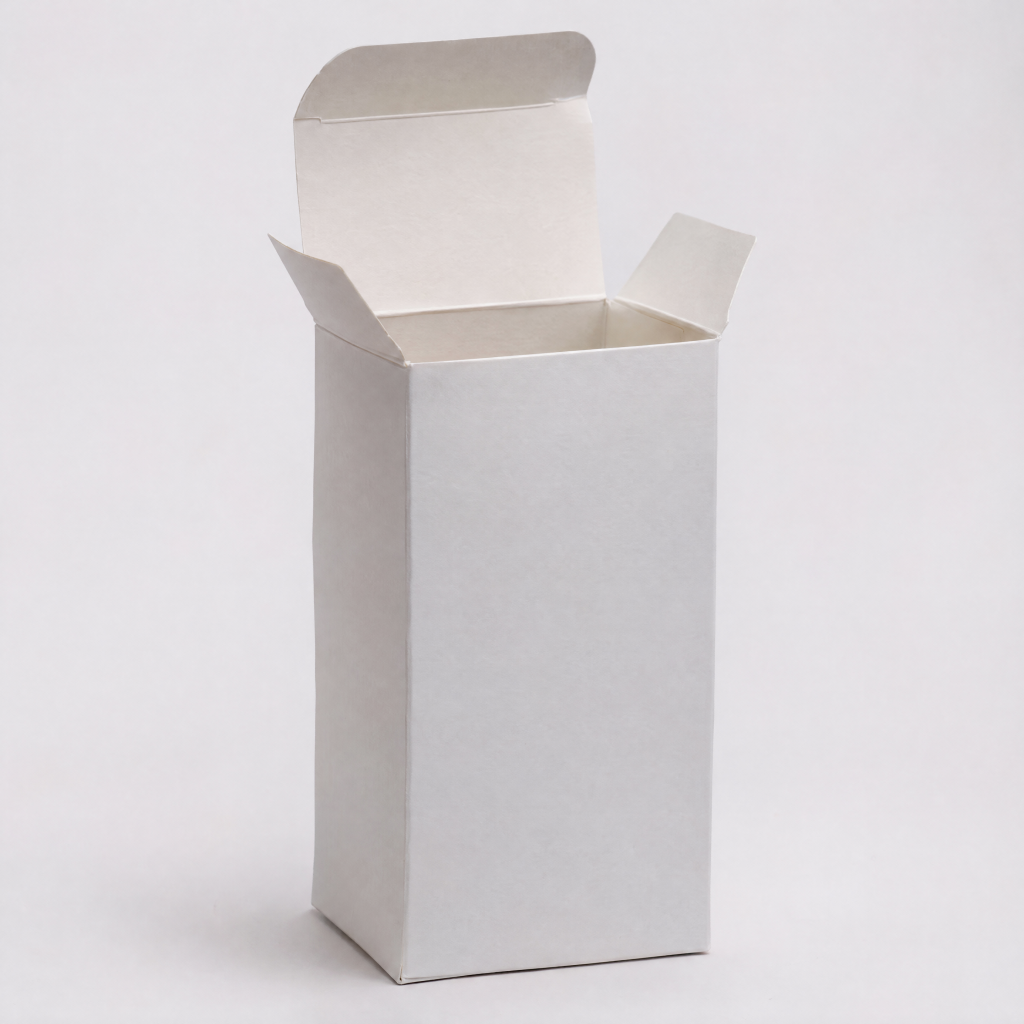
An auto-bottom box has a base that locks itself as the box is opened out. The packer pushes the sides apart and four flaps fold into a interlocking floor, so no taping or gluing is needed at the bottom. It is the structure for assembly lines and for anyone who has watched staff spend a shift taping cartons shut.
How it is built
The sheet is printed, die-cut and creased, the side seam is glued, and the bottom flaps are pre-broken along their fold lines so they deploy in the right order. The carton ships flat with the base folded up. When it is erected, the four flaps rotate against each other and lock; the sequence is fixed by the die, not by the packer.
What to watch when you specify
The base carries the whole load through four paper flaps, so the board has to be stiff enough to stop the floor bowing and the locks popping. A heavy product will find the weakest lock first. The pre-breaking matters too: a flap that has not been broken properly will fold the wrong way once, and after that it never sits flat.
Material and size
Caliper and lock design go together. A thicker board gives a stronger floor but is harder to fold, and the lock needs a longer flap to engage. For heavy or sharp-edged products, the base can be glued as well as locked, or a board pad can be dropped in, which turns the auto-bottom into a load-bearing floor rather than a folded one.
| Item | Typical specification |
|---|---|
| Base | Four-flap auto lock |
| Delivery | Flat, base pre-folded |
| Board | Caliper set by product weight |
| Option | Glued base or board pad |
| Size | Confirmed per order |
| MOQ | Confirmed at quote |
Options we build
- Crash-lock base, or a base that is glued as well as locked
- Board pad dropped in for heavy products
- Tuck lid, or a lid with a tear strip

What goes wrong, and how we test for it
The floor opens. It happens when the lock tabs are too short for the caliper, or when the board has softened in storage and the flaps no longer hold their fold. A sharp or heavy product concentrates load on one flap and works the lock loose from the inside. We load a sample to its rated weight and leave it standing for an hour before approving the base.
Where it fits, and where it does not
Against a folding carton with a glued base, an auto-bottom saves the taping step and erects faster, which matters at volume. Against a mailer box, it is lighter and prints better but offers almost no cushioning, so it suits products that are already protected rather than products that need protection.
What drives the unit price
The die is more complex than a standard carton, so the fixed cost is higher, and the pre-breaking adds a pass. Per unit it is cheaper than any hand-assembled base at volume, because the labour moves from the packer to the machine. Below a few thousand units the die dominates.
Packing and freight
These ship flat and erect on site, which is the point. Store them flat and dry: a carton that has been compressed under other stock will have its base flaps set in the closed position and will not deploy cleanly. If the base is glued as well as locked, check that the glue has not blocked the flaps together.
What to send us
Send the product weight and how it sits in the box, because a concentrated load finds the weakest lock. Tell us whether the carton will be erected by hand or on a machine: hand erection tolerates a tighter lock than a machine does. If the product is sharp, say so, because it changes the base specification.
Other structures to compare


Related reading

Questions
How fast does the base close?
Around three seconds in a hand trial. Confirm with the real product loaded.
Can it carry liquids?
Not without a separate barrier. The board is not waterproof.
Does it need a die?
Standard formats do not; bespoke sizes do.