


Which Printing Machine Made Your Packaging Box?

Your box does not carry a machine badge
Open a finished packaging box and you will find a print pattern, a board grade, a finish — and no clue which press printed it. That is normal. The machine is one input among several, and the brand on the side of the unit is rarely the reason a box looks good or fails.
Still, buyers ask the question because it feels like a shortcut to quality. This is a short primer on the major sheet-fed offset press brands used in packaging, what each is generally known for, and why the brand is only the starting point.
The major press brands at a glance
Sheet-fed offset remains the workhorse for folding cartons and rigid box wraps. A handful of brands dominate the installed base.
| Brand | Origin | Generally known for | Typical fit |
|---|---|---|---|
| Heidelberg | Germany | Speedmaster platform; automation and colour control | General commercial and packaging work |
| Koenig & Bauer (KBA) | Germany | Rapida platform; large-format packaging | High-volume packaging |
| Manroland Sheetfed | Germany | ROLAND 700 platform; packaging and mid-to-large format | Packaging converters |
| Komori | Japan | Lithrone platform; stability and colour consistency | Commercial and packaging work |
| Ryobi | Japan | Mid-format presses; short-run efficiency | Mid-size converters |
| Bobst | Switzerland | Die-cutting and folder-gluers (post-press) | Finishing, not printing |
Two notes before the list is over-read. First, these are generalisations: every brand has entry and high-end models, and a well-maintained older press can outperform a neglected newer one. Second, Bobst belongs to post-press — die-cutting and folding-gluing — which is often where a box’s quality is actually decided.
The choice between digital and offset printing matters more at the order level than the brand name on the press.
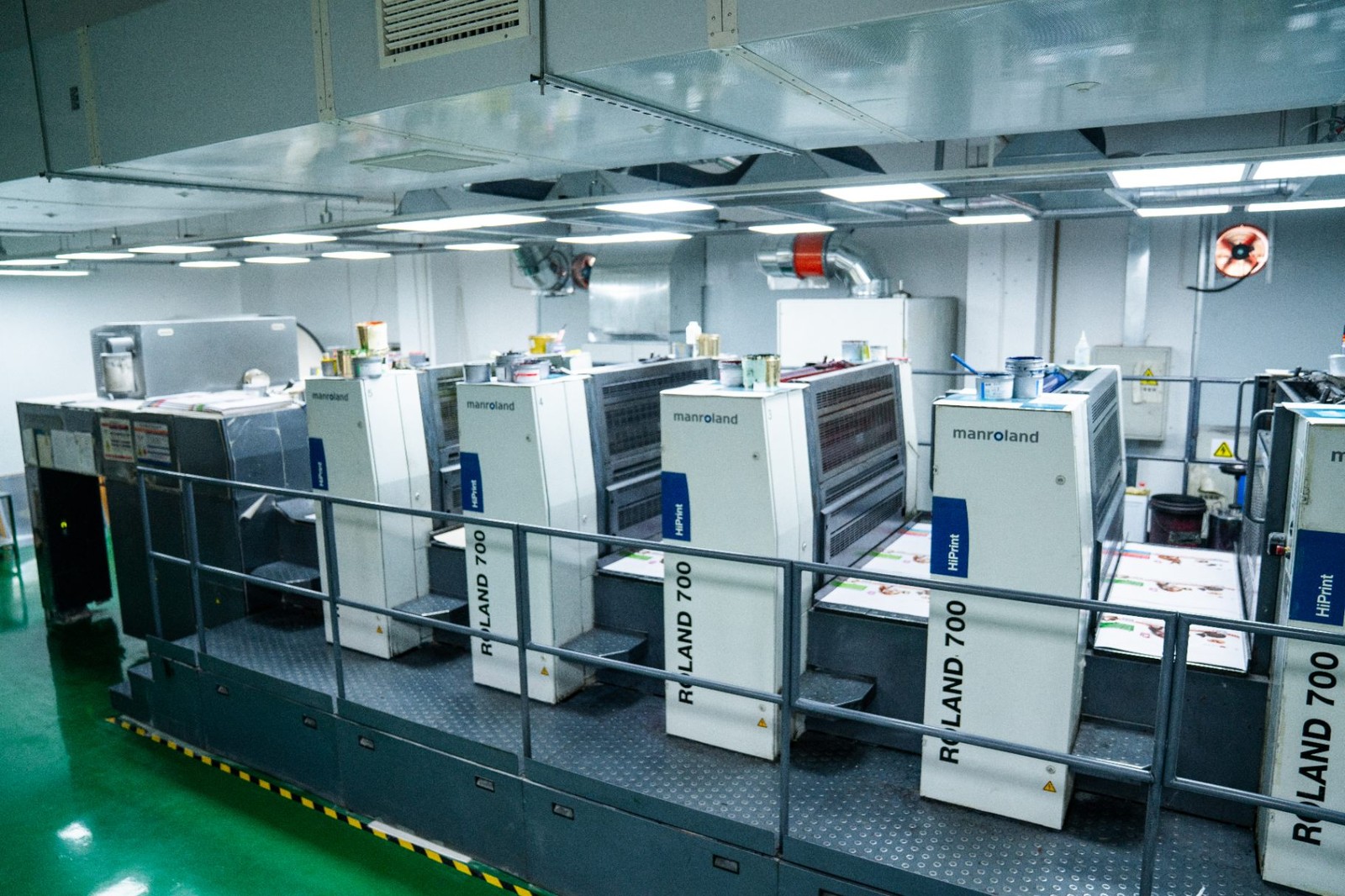
Why two factories with the same brand deliver different boxes
Two suppliers can run the same model and hand you very different cartons. The variables that sit on top of the machine are the ones buyers actually feel:
Operator skill. Ink key settings, make-ready and colour judgement are human. A skilled operator on a mid-range press often beats a careless one on a flagship.
Maintenance and condition. Rollers, blankets and grippers wear. A press is only as good as its maintenance log, and a machine’s age says little without it.
Consumables. Ink, blanket and substrate choices change how a job prints far more than the brand plate on the frame.
Colour management. A measured colour system — not the press brand — is what keeps the fifth reprint matching the first. That is the logic behind controlled colour workflows such as G7.
Post-press. Die-cutting, creasing and gluing decide whether a well-printed sheet becomes a square, clean box. A good press cannot rescue a bad die.
This is also why the practical test for quality packaging versus cheap packaging looks at the output, not the equipment list.
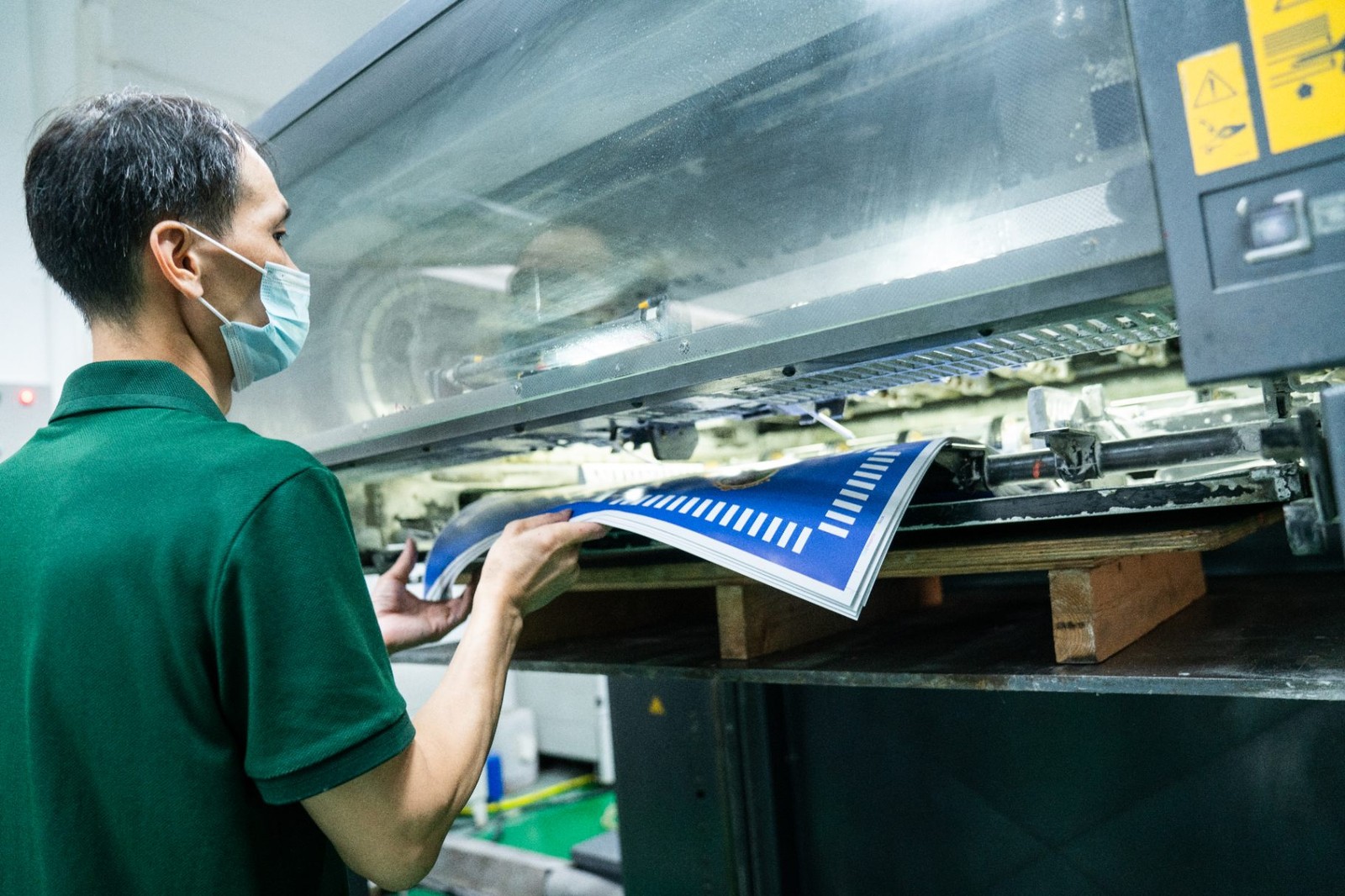
Judging a supplier by its machine list
A machine list is easy to present and hard to verify. Four traps are common:
- Brand treated as condition. A ten-year-old flagship may be tired; a well-kept mid-range press may be sharper. Ask for maintenance records, not just names.
- New machine treated as good process. New equipment with no colour standard still produces inconsistent batches.
- Format mismatch. A large-format press running a small carton wastes sheet and money; fit matters more than prestige.
- Printing confused with the whole box. Post-press — die-cutting, creasing, gluing — is half the quality and often outsourced. Ask who runs it.
What to ask instead of “which brand?”
These questions get closer to the box you will receive than a brand name does.
| Ask | Why it matters | Red flag |
|---|---|---|
| What condition is the press in, and how is it maintained? | Upkeep affects print quality more than age | No maintenance record |
| How do you control colour across a run? | Measured colour beats brand reputation | “Our press is [brand], so colour is fine” |
| Which format will my job run on? | Fit drives waste and unit cost | One press quoted for every size |
| Is die-cutting and gluing in-house? | Post-press decides squareness and strength | No in-house finishing |
| Can I see a printed sample on my stock? | A proof is evidence; a brochure is not | Render only |
The machine is a tool; the process is the product
Knowing the press brand is interesting, but it does not tell you whether your box will arrive square, colour-consistent and scuff-free. Those outcomes come from the system around the machine: the operator, the maintenance, the colour standard, the die and the glue line.
If you are evaluating a packaging supplier and want to judge the process rather than the equipment list, send us the product and the artwork. We will walk the job through print, die-cutting and finishing, and show you which checks actually decide the result.
FAQ
Which brands make printing machines for packaging boxes?
The main sheet-fed offset brands in packaging are Heidelberg, Koenig & Bauer (KBA), Manroland Sheetfed, Komori and Ryobi. Bobst is a major name in post-press — die-cutting and folder-gluers — rather than printing.
Is Heidelberg better than Komori or Manroland?
There is no universal “best”. Each brand has strong models, and the condition of the press, the operator and the colour system usually matter more than the badge on the frame.
Does the press brand affect box quality?
It sets a ceiling; the process decides how close you get to it. A well-run mid-range press with measured colour will beat a neglected flagship without a standard.
What about die-cutting and folder-gluers?
They are at least as important as the press. Die-cutting and creasing decide fold quality and squareness, and gluing decides whether the box holds. Ask whether those steps are in-house.


