


Why Two Quotes on the Same Packaging Drawing Come Back Far Apart
Two suppliers get the same dieline and send back prices that differ by more than the buyer expected. The instinct is to assume one of them is gouging. Usually neither is. That drawing can be made three ways: offset litho printed on a sheet and wrapped onto greyboard, direct print on board, or a digital run at short quantity. Each route carries its own setup, its own minimum, and its own number of decoration passes. A wrap needs printing, lamination, mounting and cutting. Direct print skips the mounting step. Digital skips the plate but costs more per unit.
That is where the gap sits, and it is also where the calendar gets set. Tooling, print passes and assembly are the lines that actually move a delivery date, and all three are fixed at design approval, well before anyone books freight.
The design fee is a separate question. A white structural sample proves the box folds and fits. A decorated proof proves color, foil registration and finish. Approving one says nothing about the other.
So the decision before tooling is narrower than it looks: approve the route as quoted, ask for a different route on the same dieline, or re-quote. All three are cheap now. None stay cheap once the cutting die is made.
What Drives Packaging Cost and Lead Time in an ODM Quote
An ODM quote is a stack of decisions wearing one number. Five levers sit under it: sheet yield, print passes, tooling, assembly method, and where the run sits in the queue. Ask which of the five moved and the price stops being a mystery.
| Buyer situation | Route that fits | Cost driver to watch | Lead-time driver to watch | Where it stops making sense |
|---|---|---|---|---|
| Rigid gift box | Printed wrap on greyboard, hand-assembled | Hand assembly, wrap waste, every finishing pass | The assembly bench queue, not the press | Volume grows until hand work dominates the unit price |
| Folding carton, retail | Direct print on folding board, machine-glued | Sheet yield, board grade, ink and coating passes | Print passes, then die cutting and gluing setup | The run is too short to spread die and setup across units |
| Printed mailer | Corrugated board, one or two print colours | Board grade, sheet yield after the dieline | Printing and conversion | Decoration demands multiply, or a heavier wall raises freight |
| Paper tube | Wound tube with a printed wrap | Diameter and wall thickness tooling | Tooling ahead of the first run | Short run on a non-standard diameter |
This is where manufacturing techniques affect packaging cost and lead time most visibly. Every added decoration is a separate offline pass with its own setup and handling, so foil, emboss, spot UV, and soft-touch lamination each add cost and queue time beyond the printing itself. Sheet yield moves unit cost without touching the design: a small change in size can alter how many boxes fit on a printed sheet, and that is often the cheapest saving in the whole file.
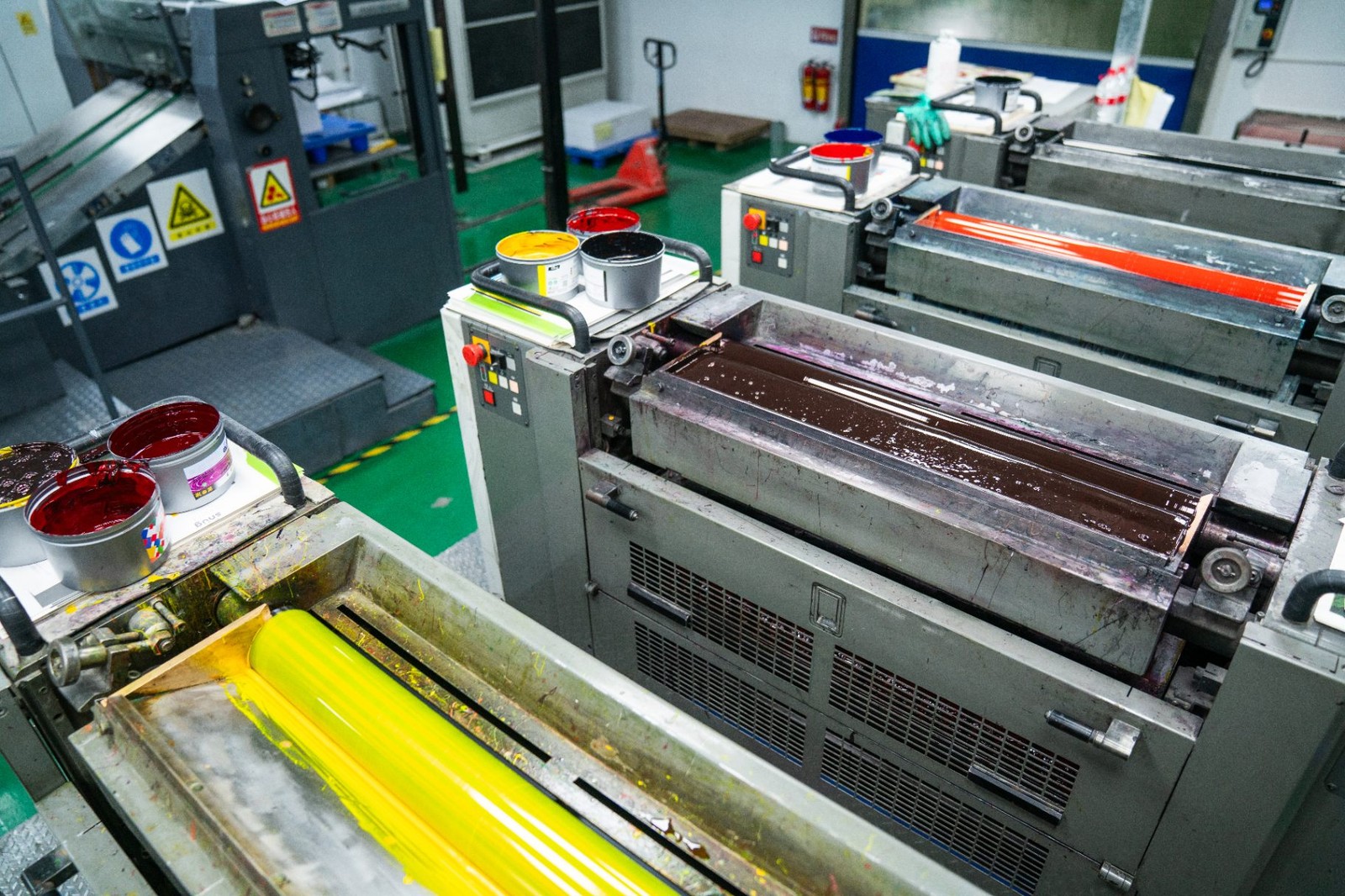
Where Each Manufacturing Technique Fits: Short Runs, Seasonal Drops, Gift Sets
A first run with unproven demand is the worst place to spend tooling money. If nobody knows yet whether the product sells, a standard die and a plain print keep the commitment low. A custom die adds a tooling step before the first box runs, and each decoration pass turns the test into more of a bet. The buyer gives up shelf presence, which is the right trade now. Foil and emboss can wait for a run with evidence behind it.
When the on-shelf date is fixed, the calendar decides the route. Fewer decoration passes and machine-folded construction protect a launch date better than hand work; each extra offline pass adds setup and handling, and hand assembly sits in a queue the buyer does not control. A plainer box that lands on time beats a heavily decorated box that misses the date. Retailers do not extend a seasonal window for a late shipment.
Premium gift sets pull the other way. Hand-wrapped rigid boxes carry the price point, and the assembly bench is where that look comes from. That bench adds a labor line and a queue. Ask where this run sits in it before promising a date, and ask what else is booked on that bench in the same month. The answer moves the ship date more than the print method does.
Shipment state matters too. An assembled rigid box buys cube; shipped flat, it does not. That difference shows up in freight and warehouse cost, so assembled boxes can carry a higher landed cost than the unit price suggests. Flat shipping also moves assembly to the buyer’s warehouse or co-packer, which is a cost and a calendar item.
Refill and tube formats have a harder rule. Diameter, closure, and wall thickness are tooled decisions before they are styling decisions. Change a tube’s diameter after the die exists and the tooling clock resets.
Technique Choices That Quietly Add Cost and Weeks
The design fee is the smallest line on the quote, and the only one you can change cheaply. Once the die is cut, tooling and print passes are committed. A dieline revision after that wastes the die, the plate setup, and the calendar time already booked in the queue.
The second assumption is that the same drawing should price the same everywhere. It rarely does, and the gap is seldom margin. A supplier printing litho sheets and wrapping them onto greyboard runs a different sequence from one building the box from a rigid board blank. Different equipment, different board grade, different finishing passes. Two numbers on one drawing can both be honest.
The third is reading unit price as total cost. Assembly, packing state, and shipping cube sit outside the piece price. An assembled rigid box buys cube; a flat-packed one moves the assembly somewhere, and someone pays for it.
Three checks catch most of this before tooling goes out.
Put the grain direction against the fold. Board grain running across a heavy ink film can crack along the fold, and a crack found after sampling means cutting a new die.
Ask which operation is the real constraint this quarter: printing, die-cutting, or the hand-assembly bench. That answer tells you where the weeks actually sit, and it moves month to month.
Then write the spec out: board grade and thickness, print method, the whole decoration list, and whether the box ships flat or assembled. Details left implied in a chat thread are exactly what make two quotes look comparable when they are not.
How to Vet a Supplier Who Owns Both the Design and the Tooling
When one supplier draws the dieline and cuts the die, nothing in the chain gets a second opinion. That can be efficient or it can be a trap, depending on whether the buyer can see the route. Vetting this kind of supplier is less about trust and more about paperwork you can point at later.
| What to ask | Evidence that answers it | Red flag | Where it bites later |
|---|---|---|---|
| Who holds the dieline file and the cutting die? | A written answer on the quote or PO naming the holder, plus the dieline revision number | “We keep all files for you” with no revision number and no ownership line | Moving to a second factory means paying for tooling twice, or discovering the die was never yours to take |
| What does the certificate cover, and for which site? | ISO 9001, ISO 14001, or REACH paperwork that names the assessed scope and the physical site, not a photo of a framed certificate | A certificate image with no scope page, expired dates, or a site that is not the one producing your box | A certification that covers the trading office does not cover the plant, and the buyer carries that gap in an audit |
| Which operations run in-house and which are subcontracted? | A named list: printing, die-cutting, foil, lamination, hand assembly, with the outside steps marked | A claim of full in-house production with no breakdown by process | The subcontracted step is where the calendar slips, and it is the step you never see on a quote |
| What changes if we move the work later? | The tooling cost, the file handover terms, and the sample you would need to re-approve, in writing before the die is cut | A verbal “no problem, we’ll help” and nothing on paper | Release fees, refused files, or a die that only fits one supplier’s press appear exactly when you are leaving |
| Which market-specific compliance documents come with each shipment? | Files archived by SKU and destination, issued before dispatch, covering labels and recycling marks for that market | “It goes with the invoice” | Customs delays, relabelling on arrival, or a fine that lands on the importer rather than the factory |
| Can we see the approved sample and the spec side by side? | A signed sample tied to a board grade, thickness, print method, and decoration list that match the production order | The sample lives in a drawer and the spec lives in an email thread | The run matches neither the sample nor the drawing, and nobody can prove which one changed |
Read the table as a sequence rather than a menu. The first two rows decide whether the rest is even verifiable: if the supplier cannot say who owns the die or what a certificate covers, the answers below it are opinion, not record. A supplier who owns design and tooling is not automatically the weaker choice. The convenience is real, since one party holds the route and design changes can move faster. What the buyer is buying into is concentration, and concentration is only safe when it is documented.
One practical test: ask for the dieline revision number to appear on the purchase order. It is a small request, and the reaction tells you how the supplier treats file control. A factory that tracks revisions will send it the same day. A factory that does not will send a file and call it the latest, which is the answer you needed.

What to put in writing before the die is cut
Three clauses carry most of the risk. The die and dieline are held by the buyer or licensed to the buyer, with a named handover step. Certifications attach to the producing site, not to the group. Compliance documents are issued per shipment, per SKU, per destination. None of these require a lawyer to phrase, but each one needs to exist before tooling starts, because after that point the supplier has already spent money and the buyer has already lost leverage.
Before the Die Is Cut, Make the Manufacturing Route Visible
Two quotes on the same drawing stop looking mysterious once the route is written down. Before design approval, each supplier should put that route on one page: print method, board grade, the number of separate decoration passes, the tooling list and who holds it, whether the boxes ship flat or assembled, and the dieline revision the price assumes. That page is what gets compared, not the total.
The quote should also answer in lines. Tooling, sampling, unit price, and freight terms belong in separate rows, so a route change shows up as a line rather than a new total. Asking for two routes priced on the same dieline before commitment is a fair request. A plainer route on a shorter calendar is a legitimate answer, and often the more useful one when demand is still unproven. If a supplier cannot name the route, the number is a placeholder.
Then put the dieline revision and board grade into the purchase order. That is how the approved sample and the production run end up describing the same box.
The request is small: same dieline, two routes, four cost lines. A supplier who returns it in that shape has already shown how the order will be run.
FAQ
How do manufacturing techniques affect packaging cost and lead time most?
Through the number of separate operations, not the design’s visual complexity.
Can I get two packaging routes priced on the same dieline before committing?
Yes, and it is a fair request to make before tooling starts.
What should I confirm in writing before the cutting die is made?
Settle who owns the dieline and die, with a named handover step, and put the dieline revision and board grade into the purchase order.
Does shipping packaging flat instead of assembled change total cost?
Yes, because an assembled rigid box buys shipping cube while a flat-packed one does not. Flat shipping also moves assembly to your warehouse or co-packer, which is both a cost line and a calendar item to plan for.


