


Custom Packaging Production Explained: Materials, Printing, Finishing, and Assembly

A production brief is four decisions, not four departments
Most production meetings are organised by department: materials here, printing there, finishing downstream, assembly at the end. But the buyer’s job is not to manage four departments. It is to make four decisions that lock in cost, lead time and quality — usually in that order of visibility, and often in the reverse order of importance.
This is a buyer’s map of custom packaging production: what each of the four stages actually decides, which cost and lead-time drivers sit inside it, and what to confirm before the purchase order goes out.
The four stages and what each one locks in
Each stage has one decision that matters more than the rest. Change it later and you re-open everything downstream.
| Stage | Key decision | Cost driver | Lead-time driver | What it locks in |
|---|---|---|---|---|
| Materials | Board grade, caliper and grain | Material price and waste | Stock availability and mill lead time | Strength, feel and print surface |
| Printing | Digital or offset, ink coverage | Setup, plates and run length | Proofing and press scheduling | Colour consistency and the unit-cost curve |
| Finishing | Lamination, coating, foil, emboss | Film, tooling and extra passes | Additional passes and drying time | Durability, shelf appeal and recyclability |
| Assembly | Folding, gluing and hand work | Labour and line speed | Hand-assembly hours | Squareness, strength and pack-out |
Materials come first because they are the hardest to change later. The board’s thickness and grade set the strength and the print surface before a single sheet is printed.
Two brands, same box, different production paths
Take two brands ordering a similar rigid box. The first is a small cosmetics label launching with 2,000 units; the second is a retail chain ordering 200,000. Both want the same look. Their production paths are not the same.
The small brand is better served by digital printing, which avoids plate cost and makes a short run economic, and by a simpler finishing set. The retail chain is better served by offset, where the setup cost is spread across a long run and the unit cost falls. Same box, different economics — because the production path was chosen for the volume, not for the picture. The trade-off between digital and offset printing is really a question about where your order sits on that curve.
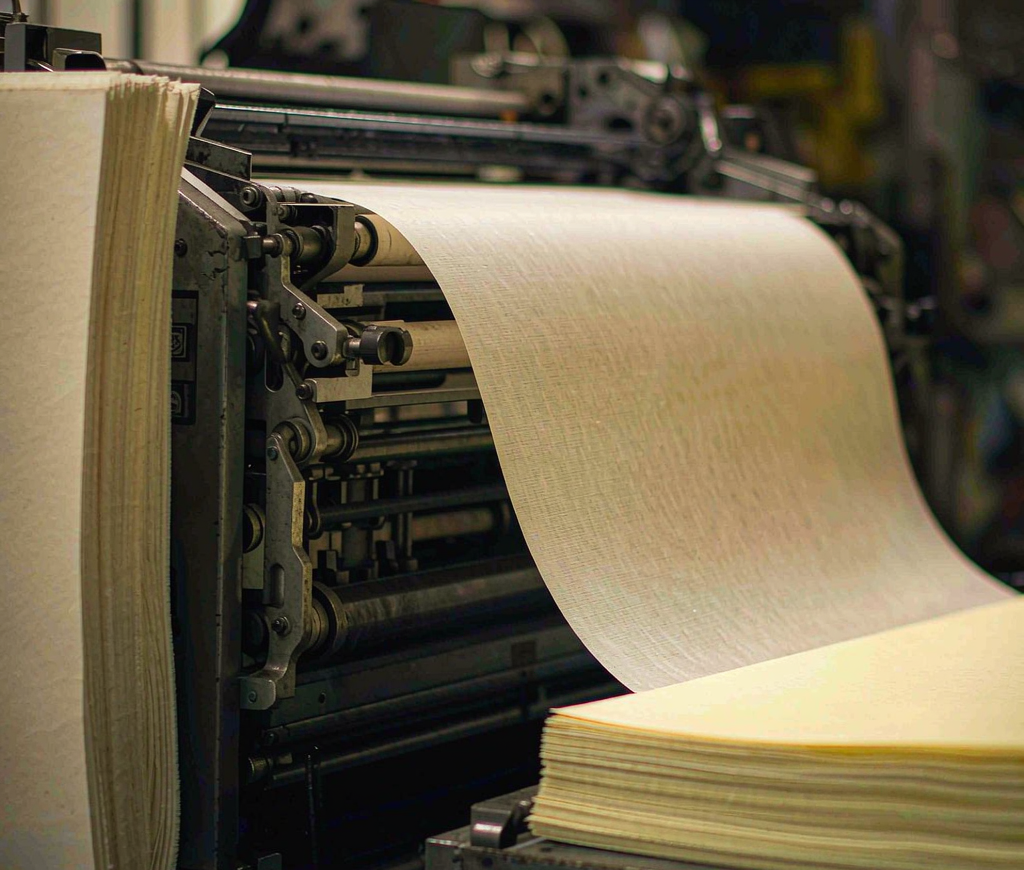
The same split applies to finishing. A matte, soft-touch or spot UV finish adds passes and drying time; on a short run that is a large share of the schedule, on a long run it is absorbed.
Brief mistakes that surface as cost or delay
Most overruns and delays are decided before production starts, in the brief. Four recur:
- Specifying a finish before the volume is known. A foil or soft-touch finish that makes sense on 50,000 units can dominate the cost of a 2,000-unit run.
- Approving print on a different substrate. The proof looks right on a coated sheet and the production board is uncoated; the colour and the fold both change.
- Leaving assembly out of the brief. Complex inserts and hand-assembled interiors are labour, and labour is the least predictable line in the quote.
- Assuming stock board is always available. A special grade may carry a mill lead time that is longer than the entire print and finishing schedule.
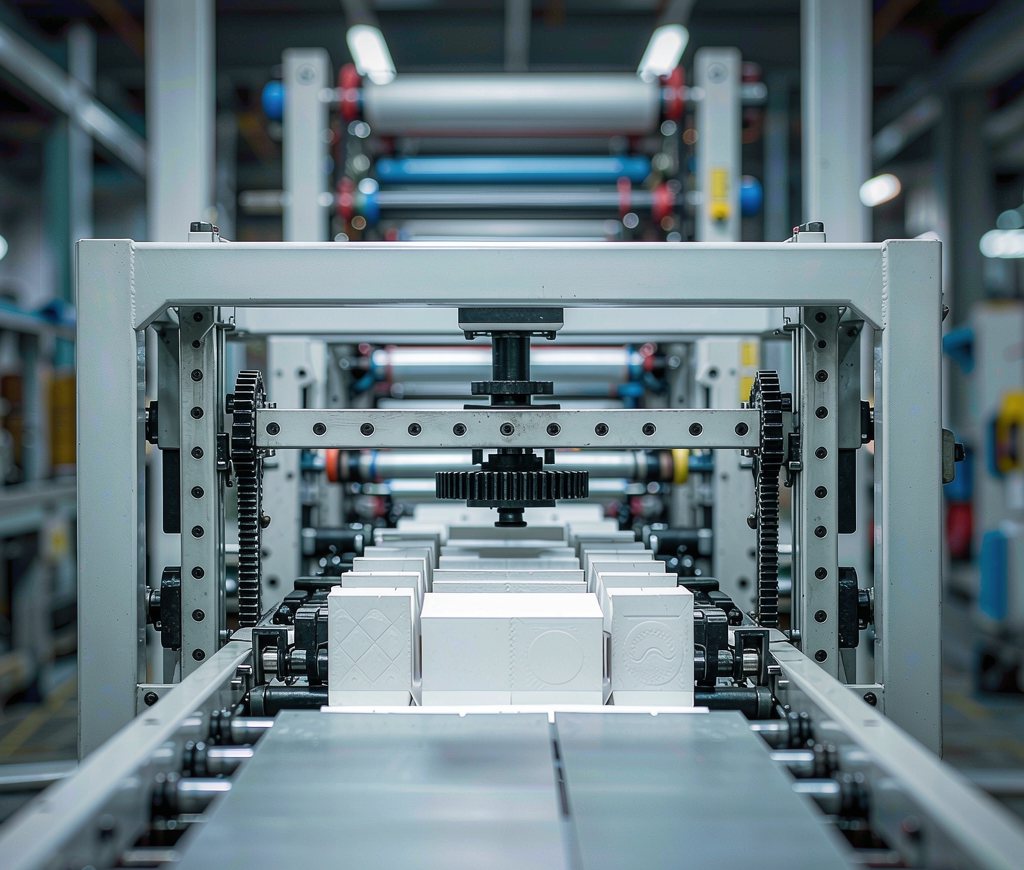
The sequence itself is well documented — the stages of the production process are not the hard part. The hard part is knowing which decision at each stage is expensive to reverse.
What to confirm before the PO
These are the questions that turn a production brief into a schedule you can hold a supplier to.
| Ask | Why it matters | Red flag |
|---|---|---|
| Which board grade, and is it in stock? | Material lead time can exceed the whole print schedule | “We’ll find something similar” |
| Digital or offset — and where is the switch point? | It determines the unit-cost curve for your volume | One method quoted for every quantity |
| Which finishing passes, and how many? | Each pass adds time and a failure point | “All finishes take the same lead time” |
| Is assembly manual or inline? | Labour is the biggest variable in complex boxes | No assembly assumption in the quote |
| What is the proof and approval sequence? | Colour and fit are locked at proof, not at delivery | Approval by photo or screen |
If the answer to any of these is vague, the schedule is vague too. A production brief is only useful when each stage has a named decision and a named owner.
The brief decides the box
Materials, printing, finishing and assembly are not four separate conversations. They are four decisions that compound: the board limits the print surface, the print method sets the cost curve, the finish adds passes, and the assembly design decides how much of the cost is labour. Get the brief right and production becomes predictable. Get it wrong and every stage inherits the problem.
If you are preparing a custom packaging brief and want to know which decisions will drive your cost and lead time, send us the product, the volume and the artwork. We will map the four stages against your order and show you where the schedule is actually set.
FAQ
What are the main stages of custom packaging production?
Materials, printing, finishing and assembly. Each stage has one decision that is expensive to reverse later, which is why the brief matters more than the production meeting.
Why does the printing method change the unit cost?
Digital printing avoids plate cost but has a higher cost per sheet; offset carries setup cost that is spread across a long run. The right choice depends on where your quantity sits on that curve.
Which finishing options add the most lead time?
Foil stamping, embossing and multi-pass lamination add the most, because each is a separate pass with its own setup and drying time. A single matte or gloss lamination is usually the least disruptive.
How do I reduce assembly cost without hurting quality?
Simplify the structure, reduce hand-assembled interiors, and design for inline gluing. The cheapest assembly is the one the box design does not require in the first place.


